Connecting Bad Gandersheim with Skegness through art, culture and conversation.
As a passionate advocate for cultural diplomacy, John Byford has played a key role in strengthening the bond between Skegness and its twin town, Bad Gandersheim in Germany. His Two Voices project - a repurposed British telephone box transformed into a striking art installation - was unanimously approved by the city council in 2014 and now stands as a lasting symbol of communication and unity between the two towns.
Since its unveiling in 2015, the installation has hosted a series of exhibitions, undergone five vibrant colour transformations, and become a much-loved local landmark - warmly embraced by the community and cherished by visitors alike.
A recent and meaningful addition to the project is an historic bench, now placed opposite the installation. It offers a quiet space for reflection, conversation, and connection - further reinforcing the spirit of friendship and shared culture at the heart of Two Voices.
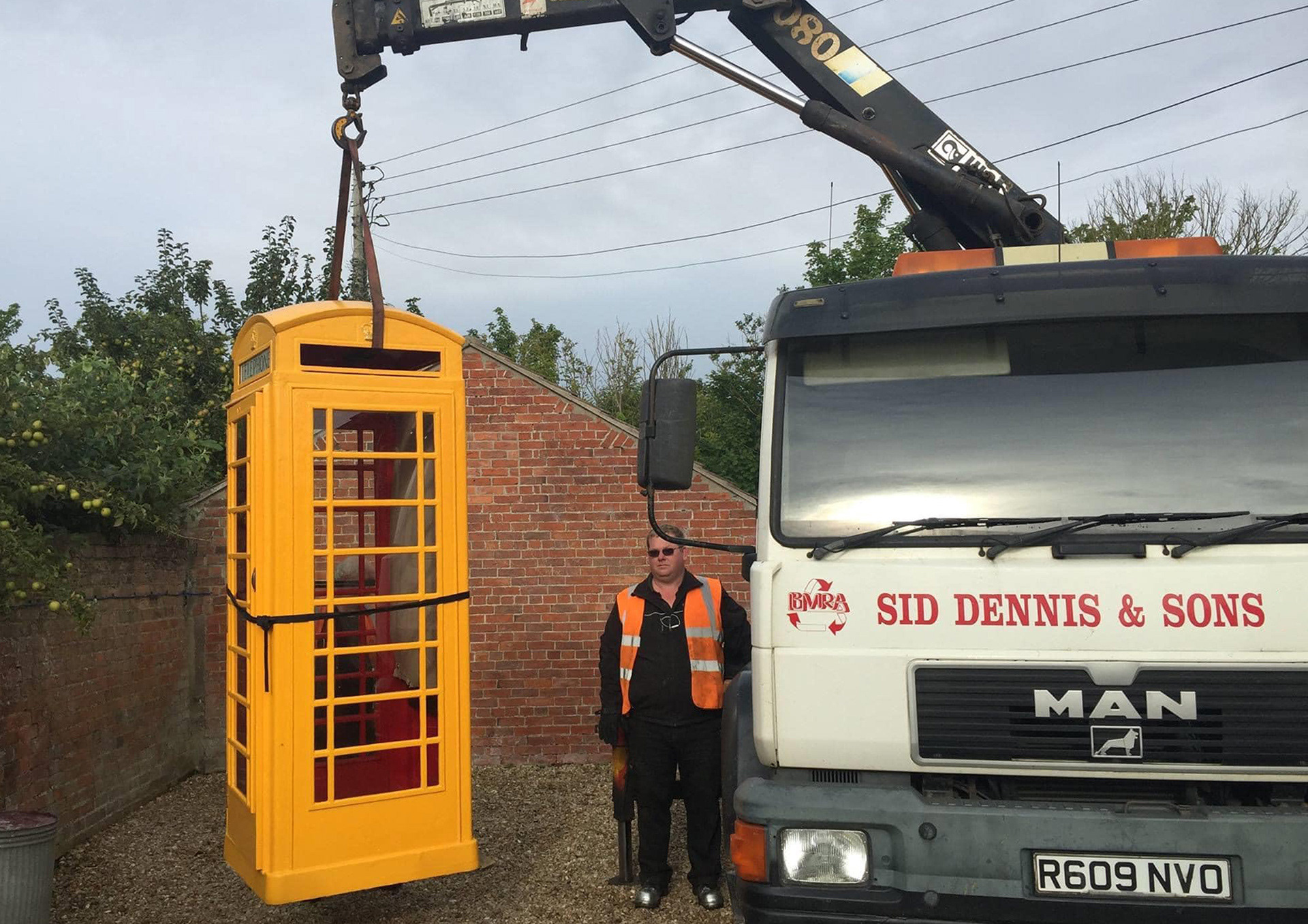
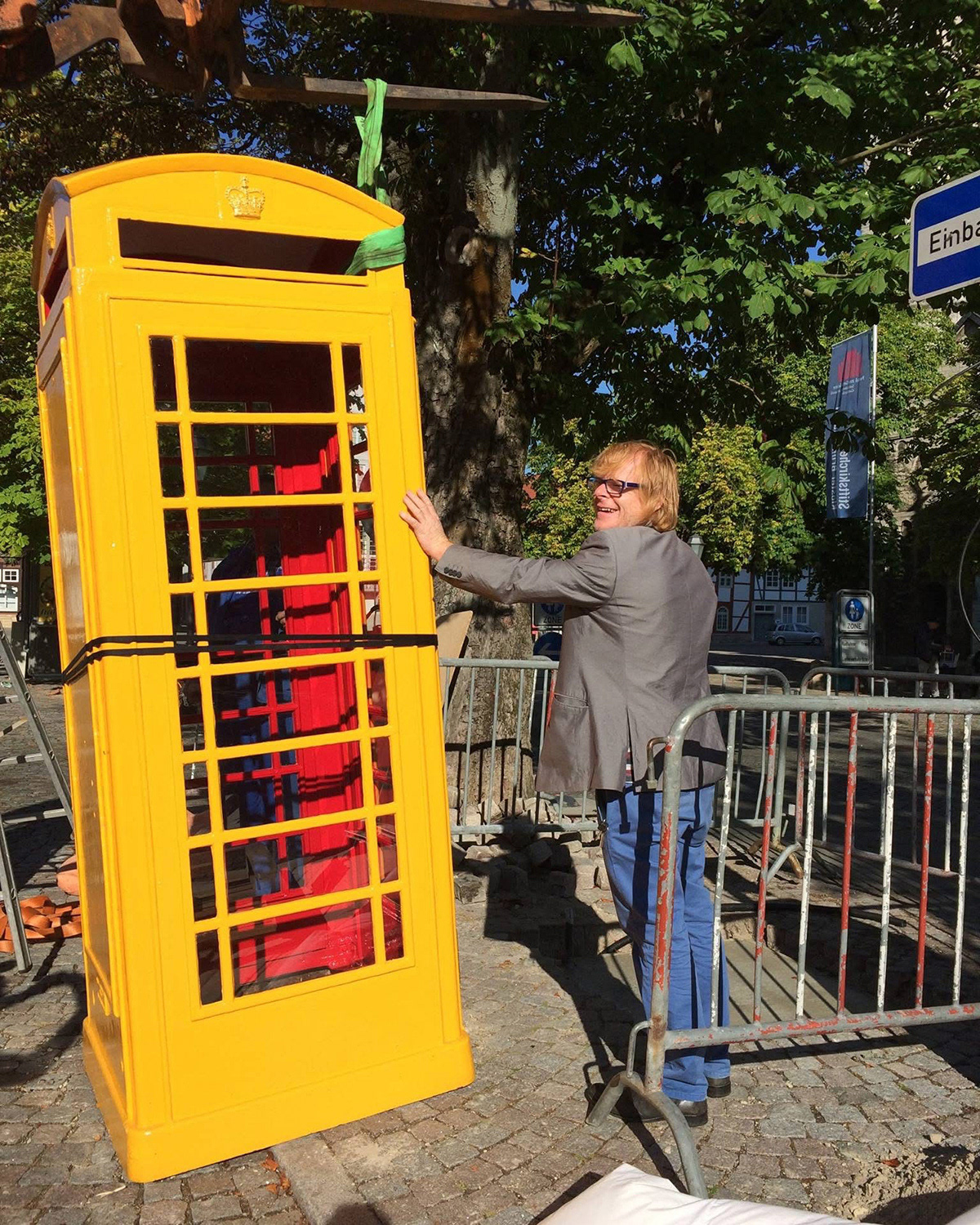
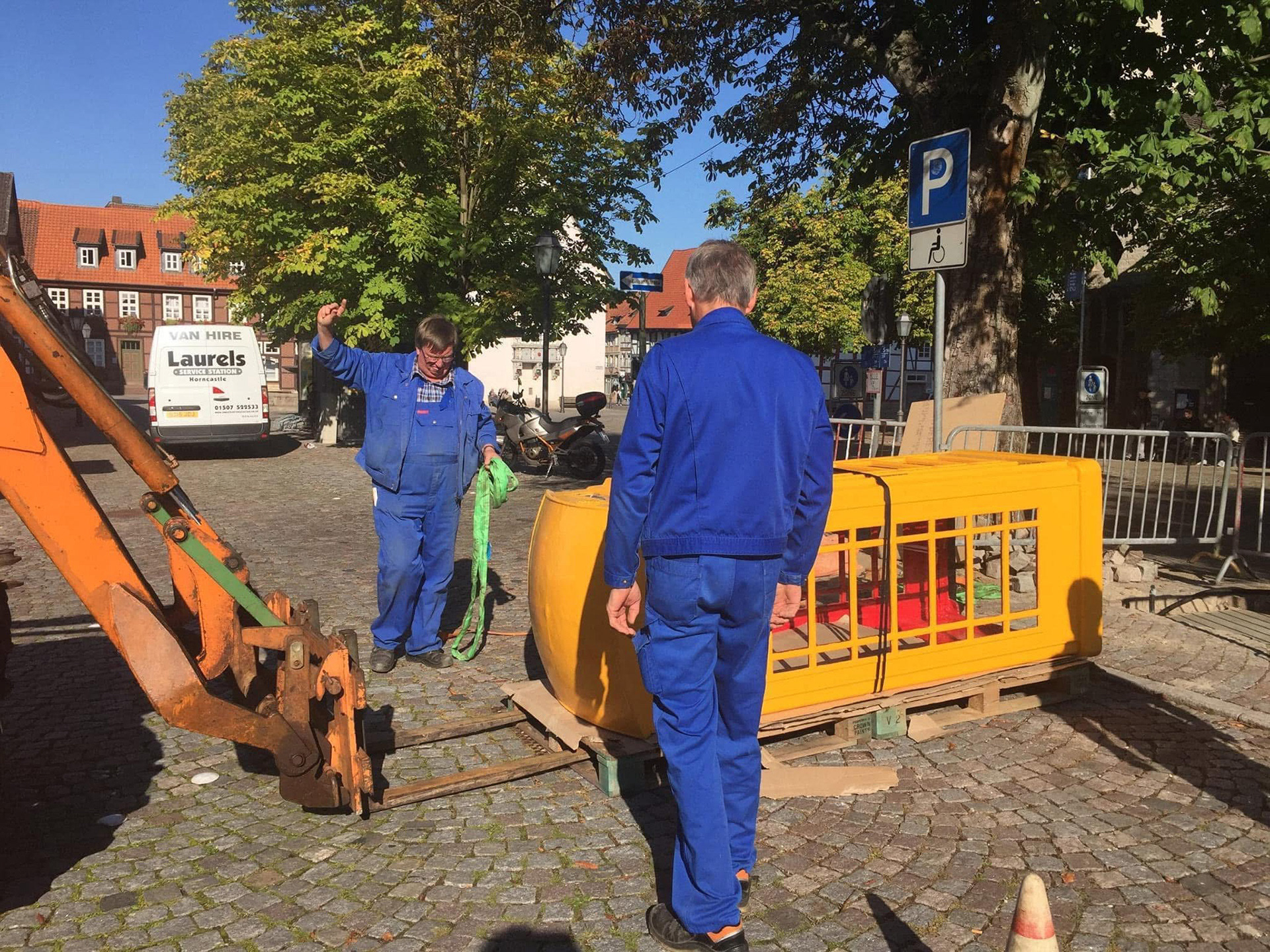
In September 2015, a beautifully restored British telephone box made its quiet arrival in Bad Gandersheim.
But this was no ordinary red telephone box. Instead, it stood proudly in golden yellow, its surface catching the light like a memory of sunlit days. The colour was no accident. It echoed the warmth of the Skegness sands and the shimmer of its seaside sun, a glowing homage to the coast from which it came.
Stepping inside, visitors discovered more than nostalgia. A striking photograph of Skegness, captured in all its seaside splendour, offered a glimpse of the town and its charm. A collection of bright and unmistakably coastal postcards rested inside, inviting people to take a little piece of Skegness with them or send a handwritten message ‘across the miles’.
The project was born from a desire to breathe fresh life into the idea of town twinning, not simply as a formality, but as a real exchange between two communities. The golden box was created as a symbolic and practical way of communicating, echoing the spirit of the telephone itself by connecting voices, bridging distance and encouraging conversation.
It was never meant to be merely decorative. It became a place for shared stories, greetings and goodwill.
At its heart was something very simple: human connection. Even as the world became increasingly digital, the postcard still had something special about it. A handwritten message carried thought, care and a little piece of the person who sent it. Postcards stayed around. They were propped on mantelpieces, pinned to noticeboards or held on fridges by magnets. Small fragments of memory that remained long after they arrived.
In its own quiet way, the yellow telephone box kept the lines open between Skegness and Bad Gandersheim, between past and present and, above all, between people.
The box was born again!

WW1 Centenary ~ 2018
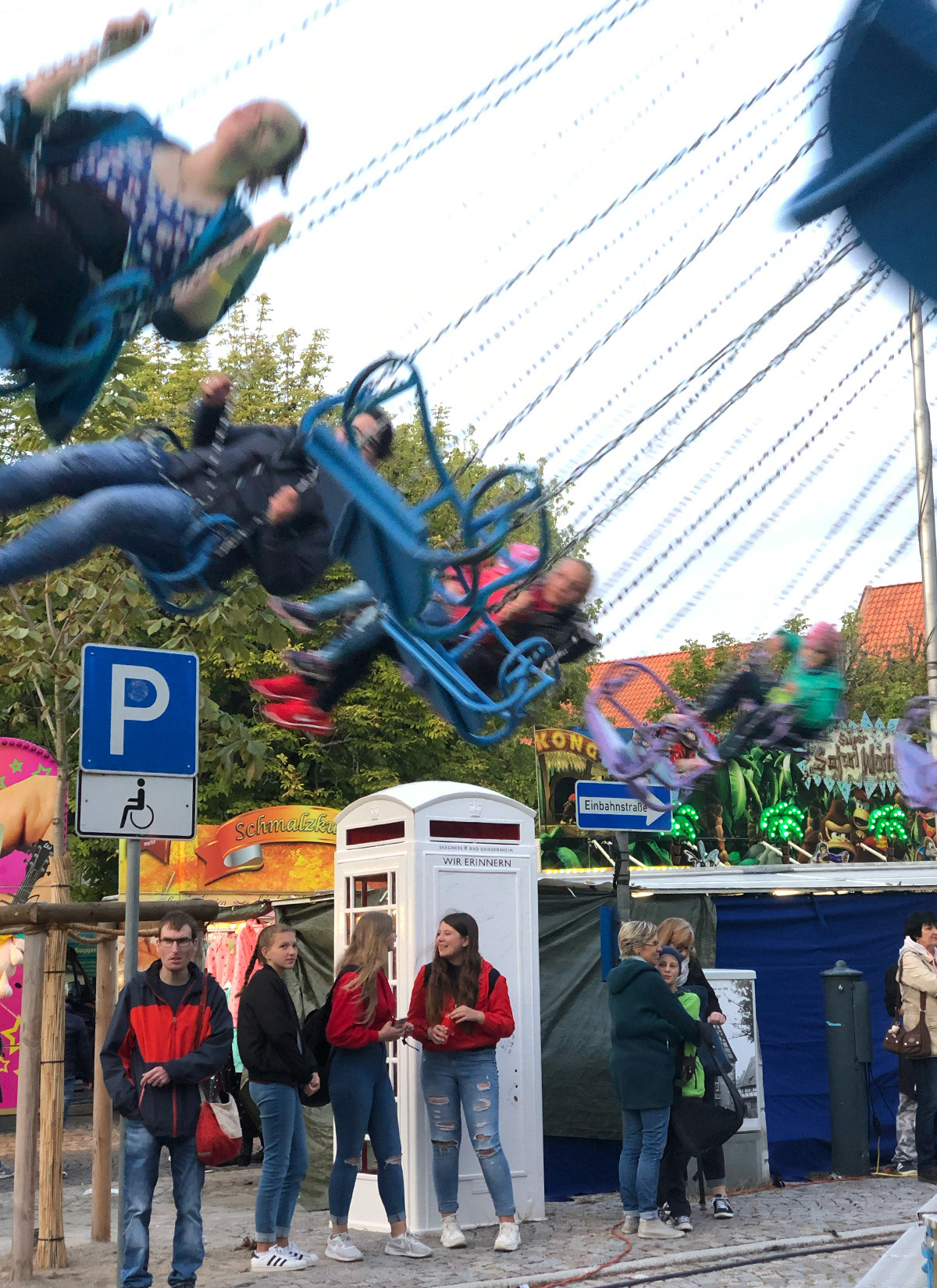
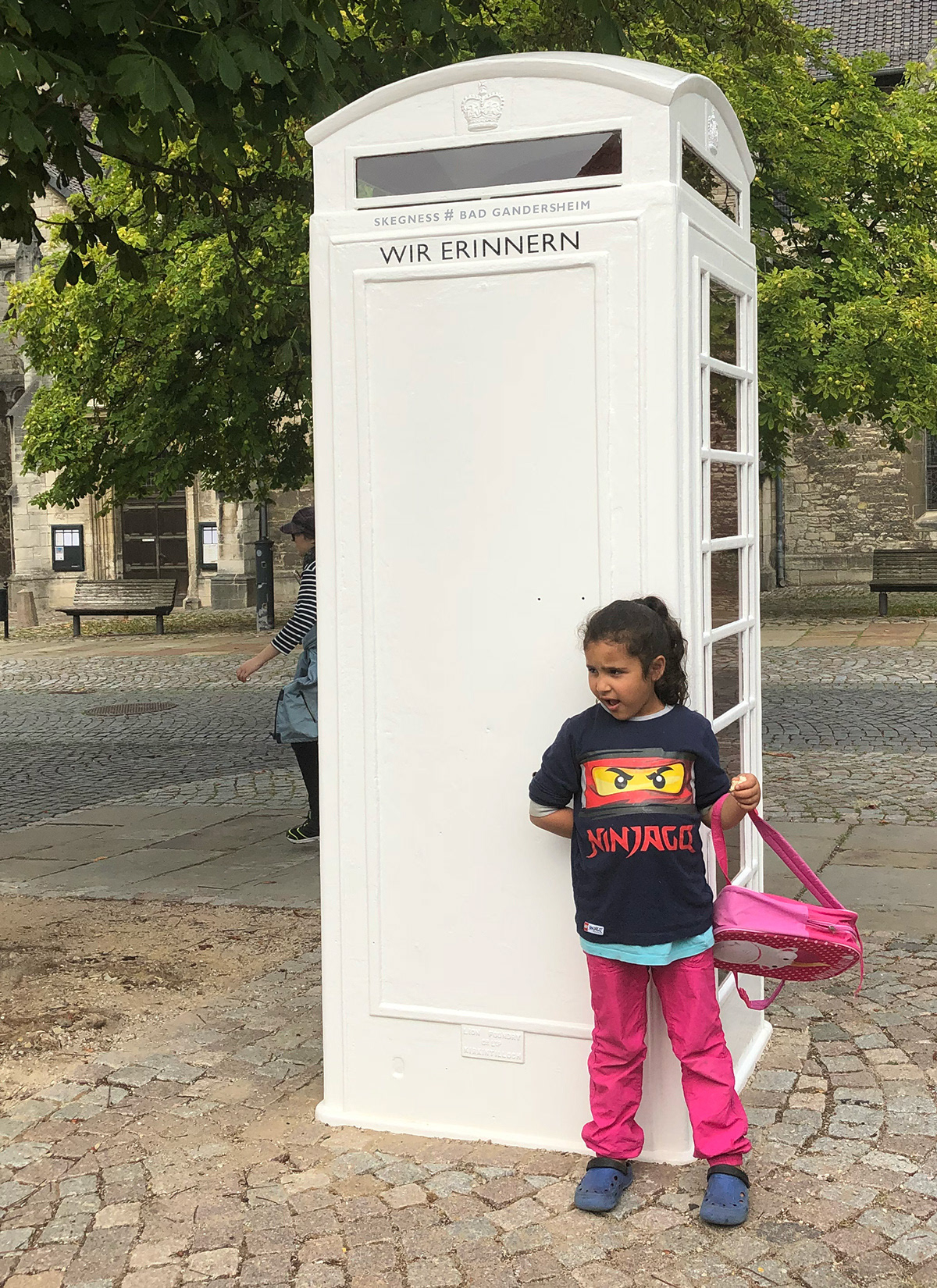
In 2018, artist John Byford reimagined the box once more, this time as a powerful symbol of peace and remembrance.
Marking the centenary of the end of the First World War (1918–2018), the project honoured the shared sacrifices of young men from both Skegness and Bad Gandersheim.
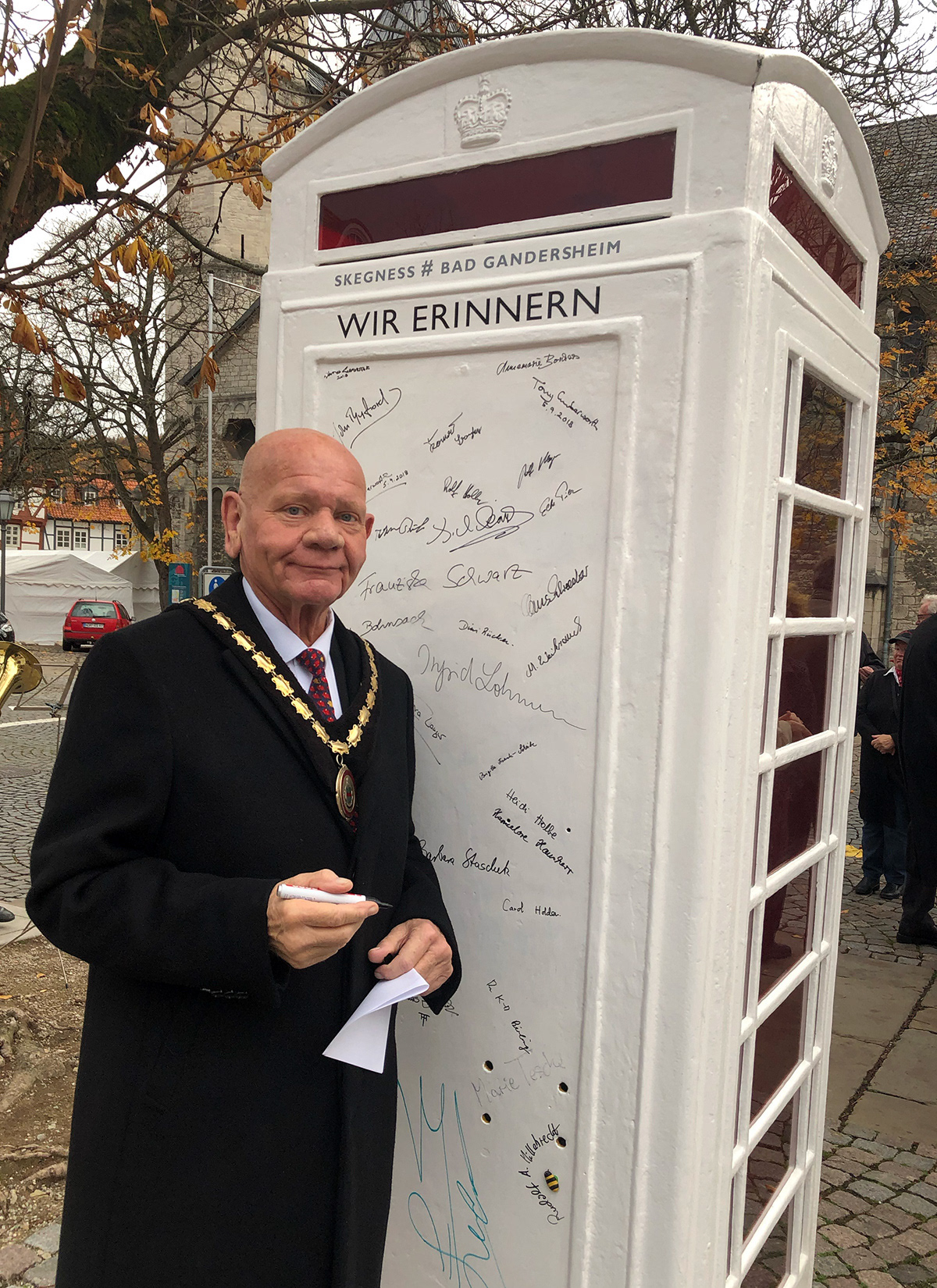
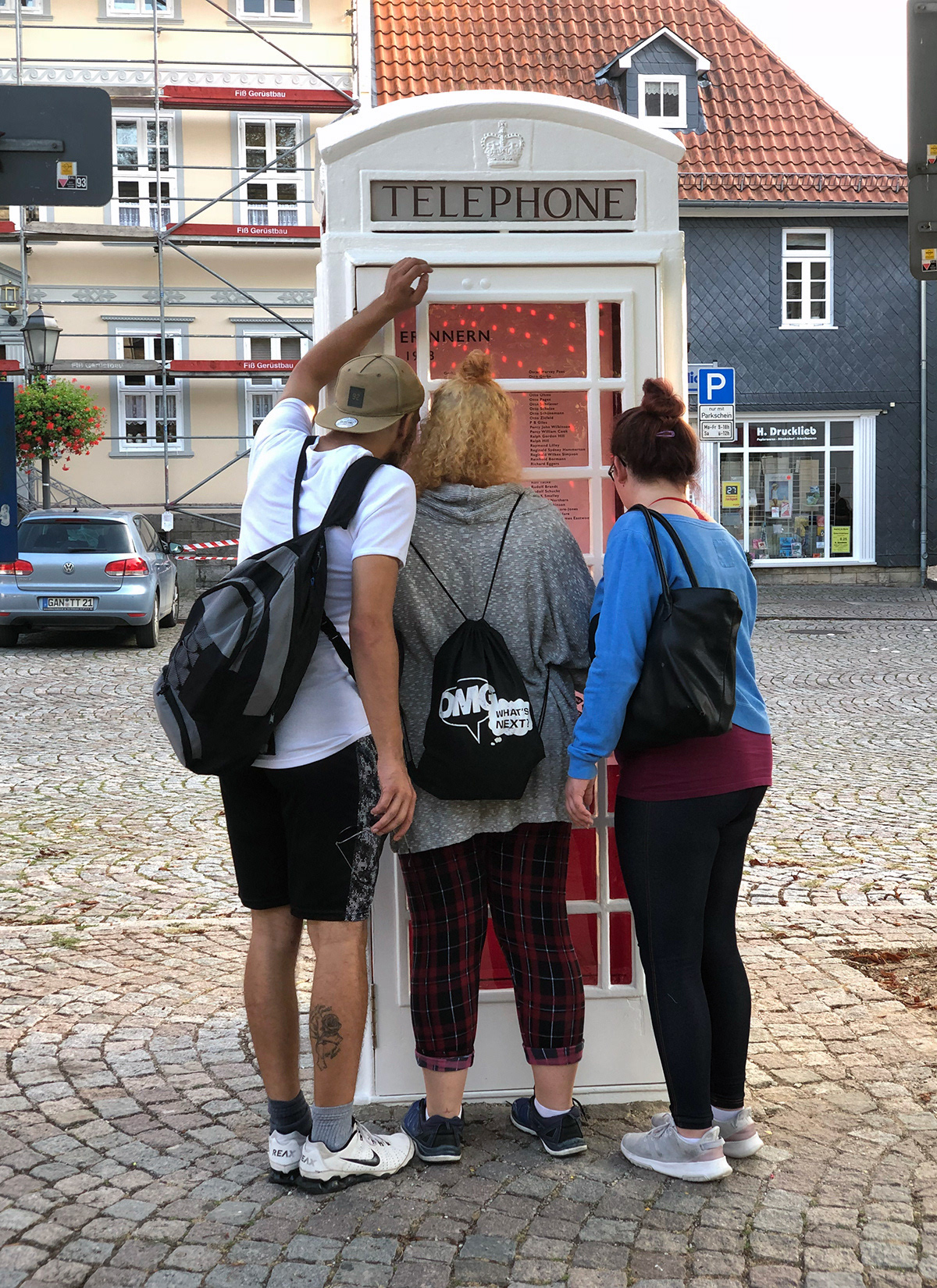
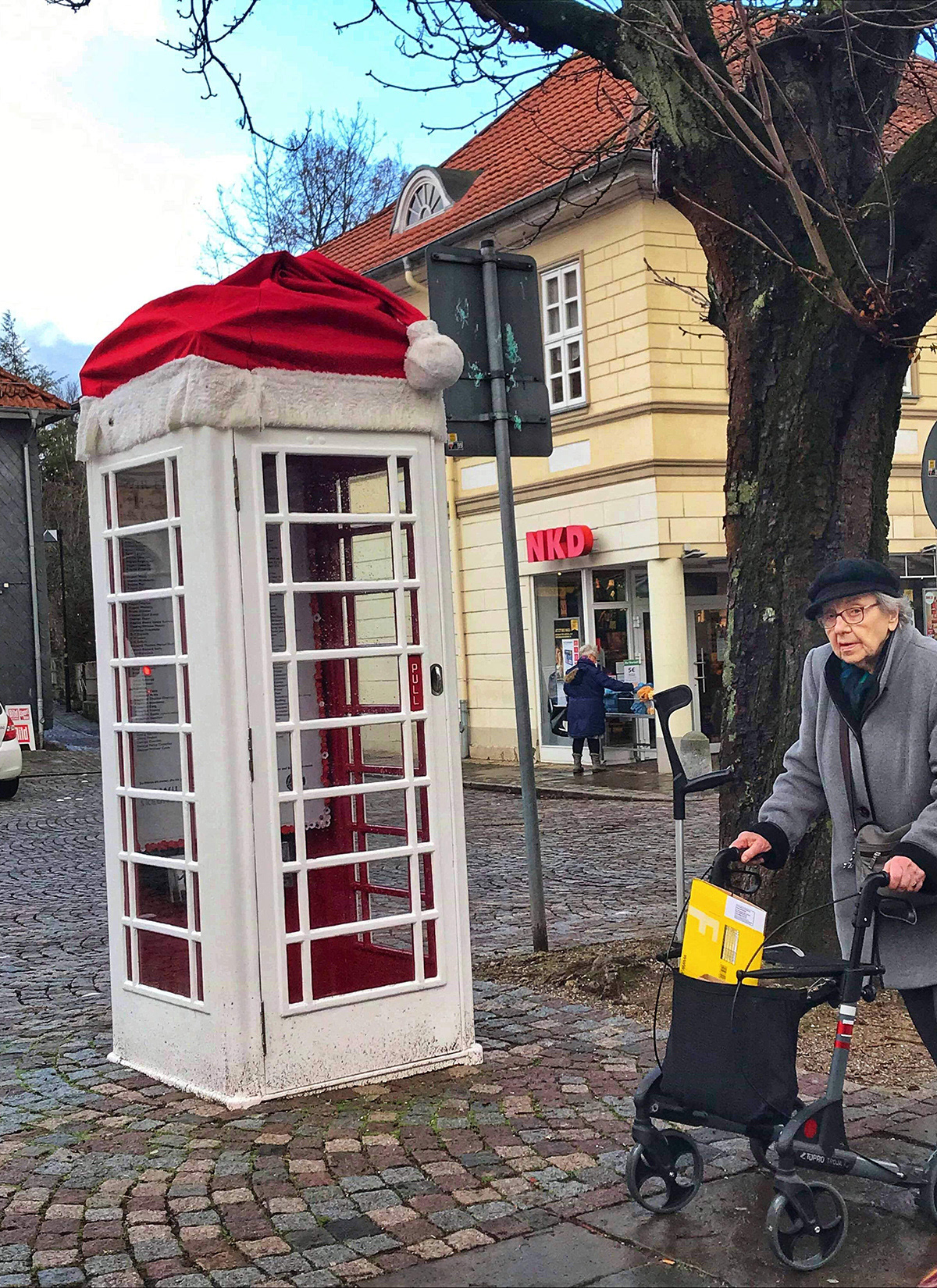
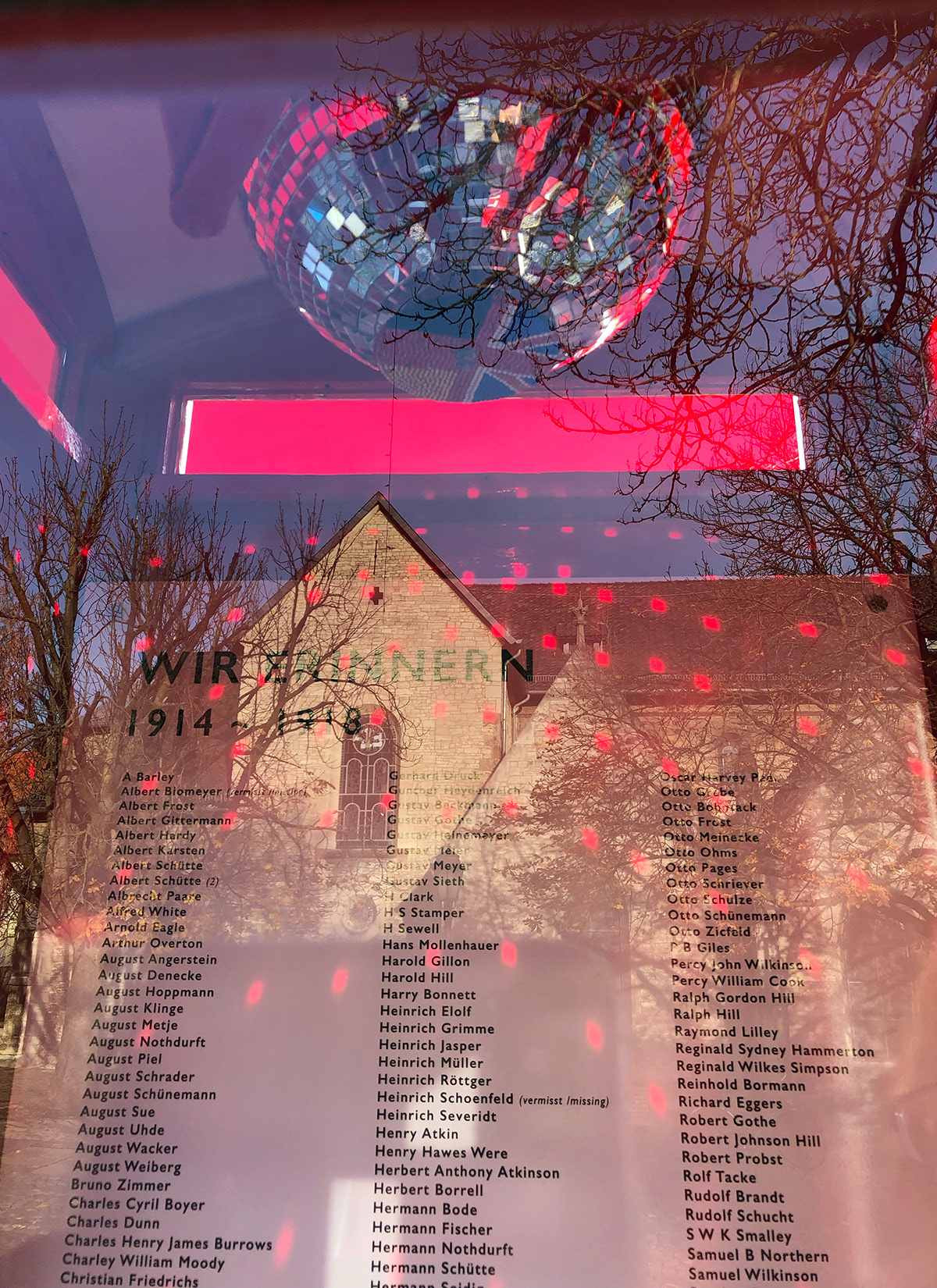
An evolution of Two Voices, the installation transformed the telephone box into a striking memorial. Painted white to symbolise peace, it carried the names of 186 young men from both towns who lost their lives between 1914 and 1918. Displayed side by side, without separation, the names reflected a simple truth: grief knows no borders.
As the sun set, a red glass panel and mirror ball cast a haunting light across the names, resembling droplets of blood. It was a quiet reminder of the terrible cost of war. A former tool of communication had become a place of memory, dialogue and reconciliation.
The Mayor of Skegness, Councillor Sid Dennis, flew to Bad Gandersheim the day after attending the Remembrance Day parade in Skegness. There he joined the Mayor of Bad Gandersheim, Franziska Schwarz, for a special ceremony where all 186 names were read aloud.
Byford’s Two Voices began as a celebration of cultural connection. ‘We Remember’ became something more. It was a chance to reflect, to honour and to ensure that the voices of the fallen from both towns and both sides were never forgotten.
We will remember them.

Brexit ~ 2019
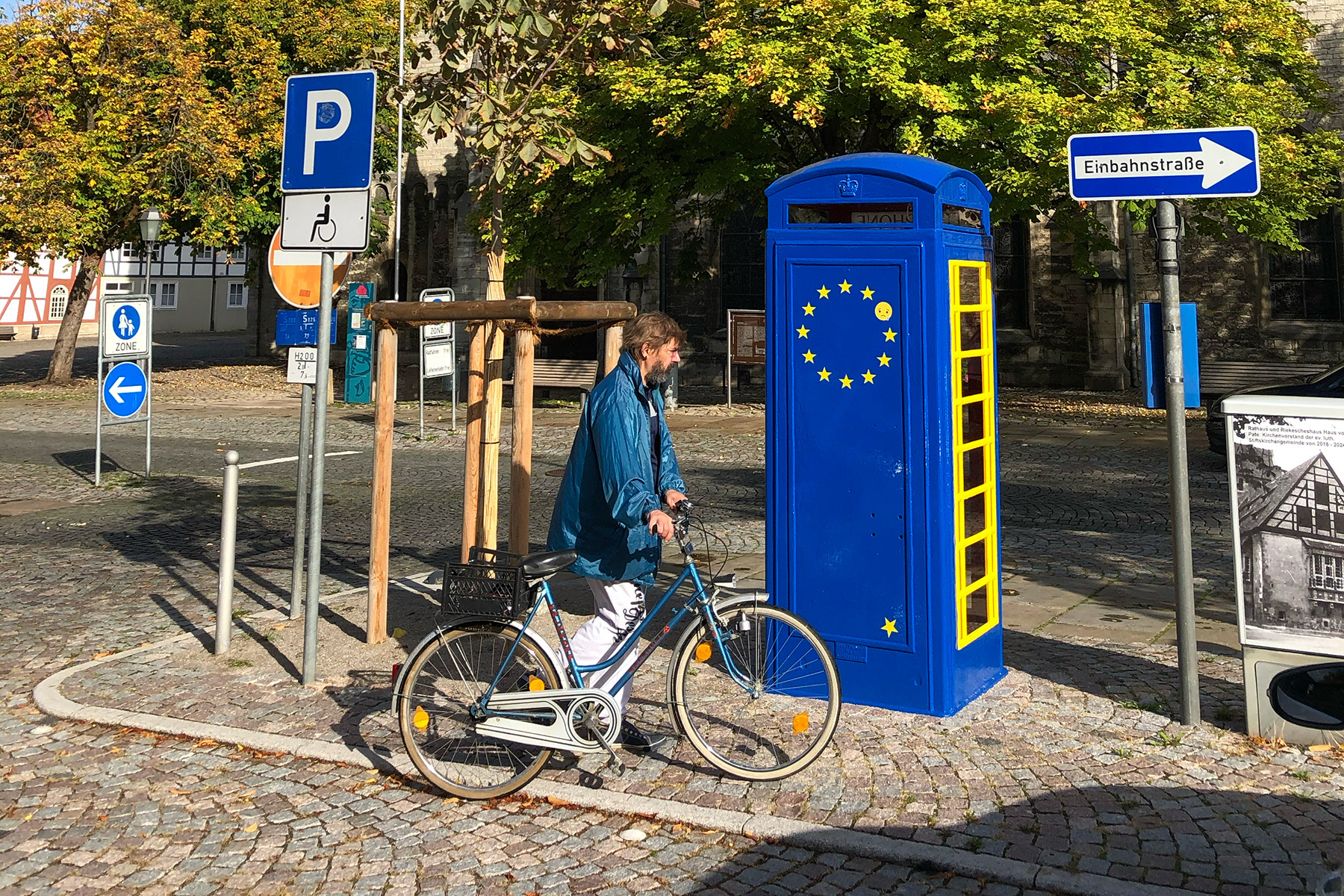
As the United Kingdom prepared to leave the European Union, an unexpected moment of reflection emerged, not one of division, but of continuing friendship.
Artist John Byford saw the moment as an opportunity to reaffirm the bond between the twin towns of Skegness and Bad Gandersheim. Whatever was changing politically, the friendship between the two towns remained.
The telephone box was repainted in the familiar colours of the European Union, deep blue and golden yellow. But one important detail had changed. Where the UK’s star had once sat among its European neighbours, it had fallen. In its place was a small sad emoji, a simple and very modern expression of sadness. The missing star was placed on the pavement below, a visual reminder that although Britain was leaving the European Union, friendships did not have to leave with it.
In a world after Brexit, communication between people felt more important than ever, and so the box evolved once again. Alongside the artwork, it became a living library where books from across Europe, including English titles, could be freely exchanged and enjoyed.
It became a place for books, language, learning and cultural exchange. Most importantly, it remained open to everyone.
The project attracted attention far beyond the two towns. What had begun as a British telephone box had become something quite different. Over the years it had changed colour, changed purpose and carried different messages, but one idea remained at its heart: keeping people connected.
And once again, Two Voices continued the conversation.
The Landesgartenschau ~ 2022
The box blossomed into a symbol of hope!
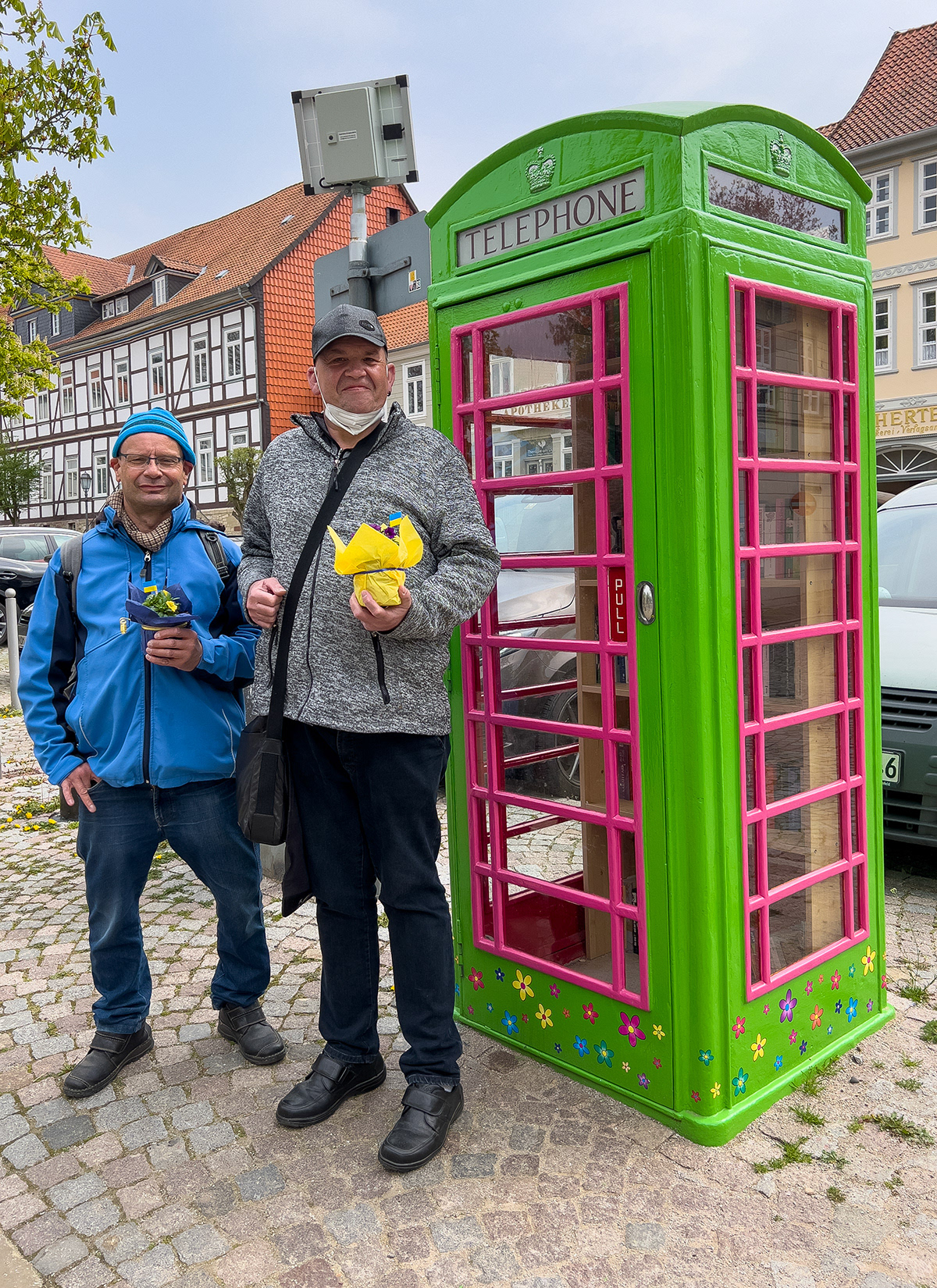
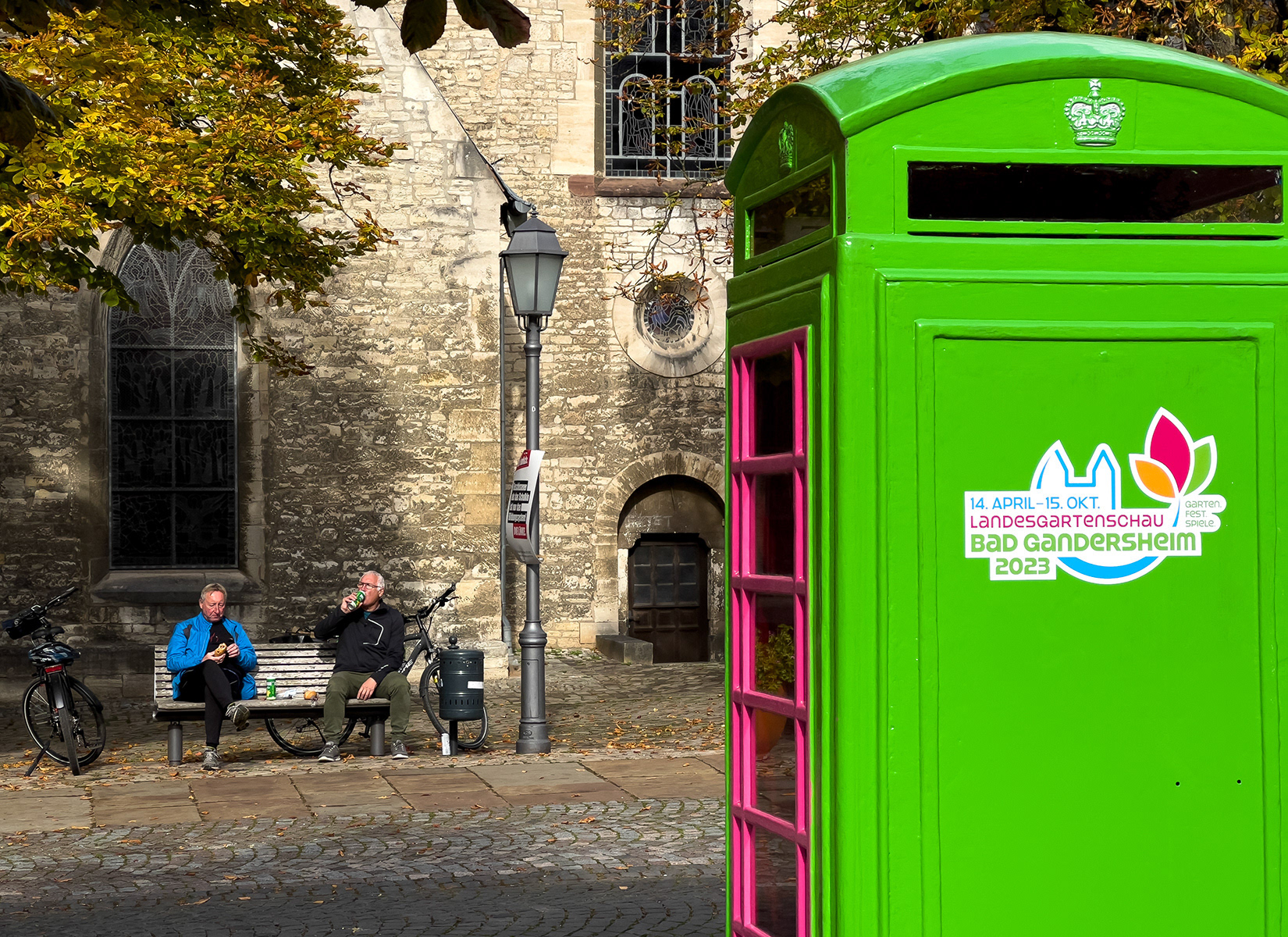
In 2021, artist John Byford returned to Bad Gandersheim to oversee the latest transformation of his ‘Two Voices’ artwork ahead of the Landesgartenschau, Germany’s State Garden Show, which was originally planned to take place in the city in 2022.*
The show would include a garden inspired by Skegness and its coastline, creating another special connection between the two twin towns.
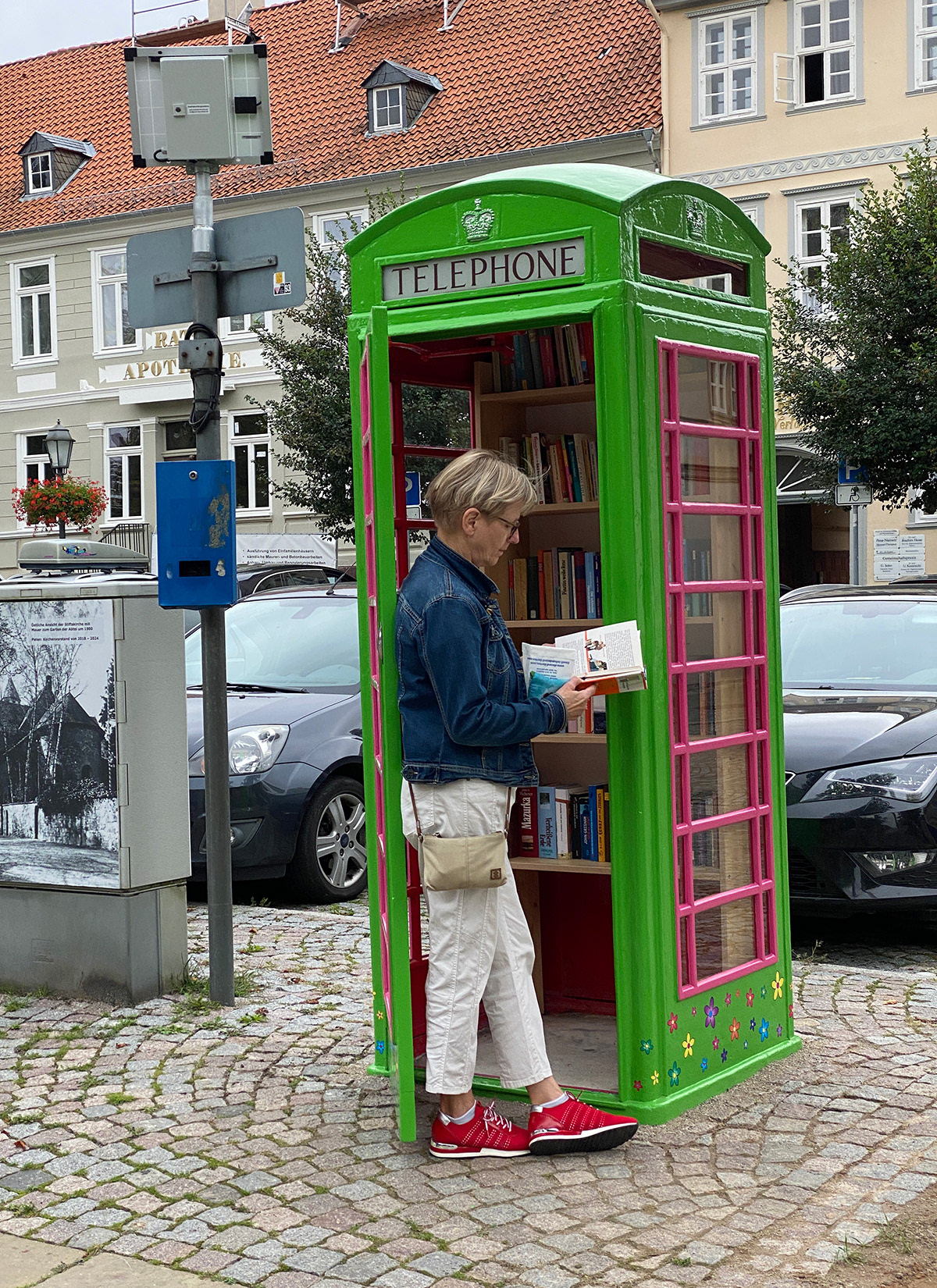
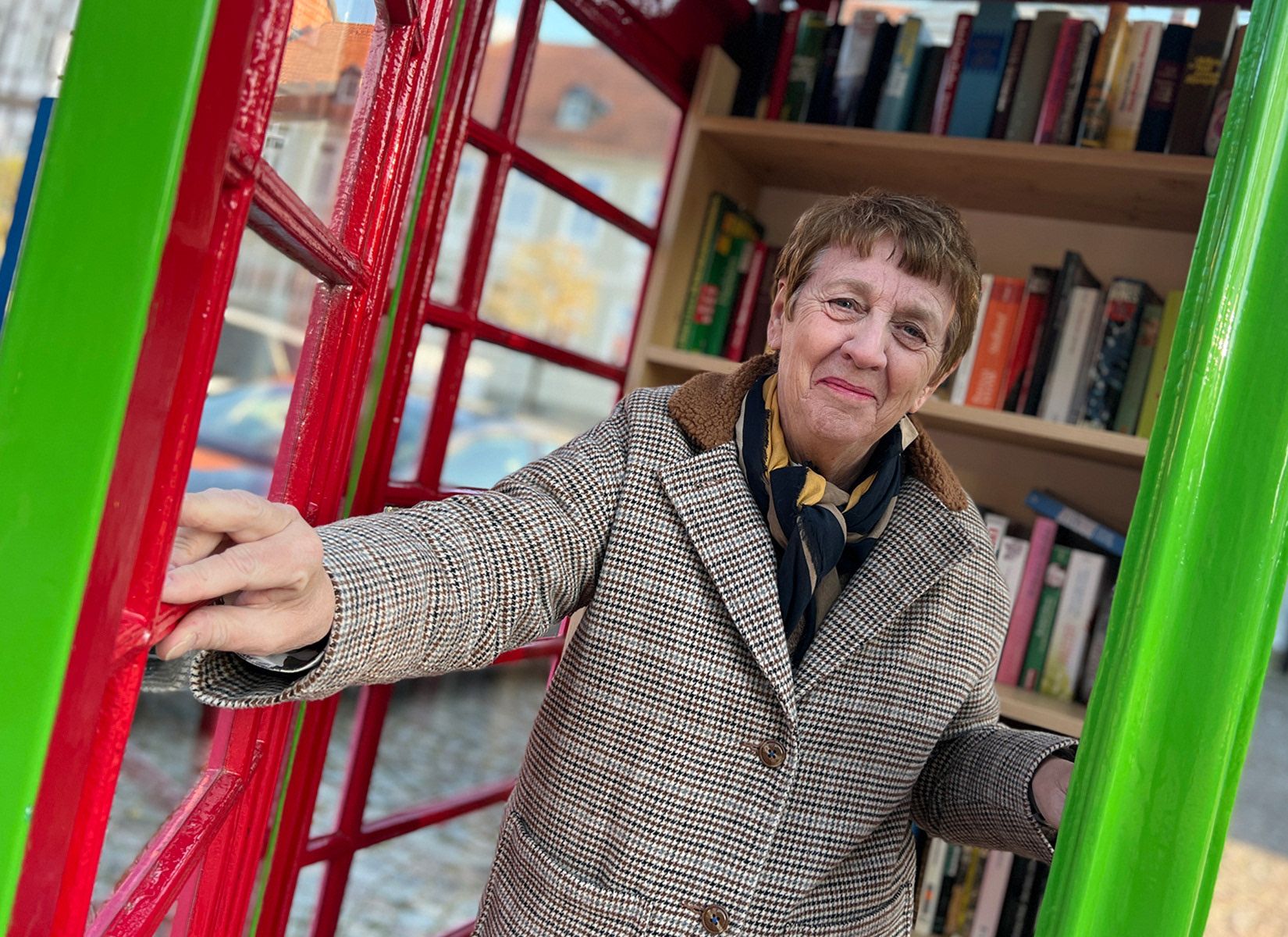
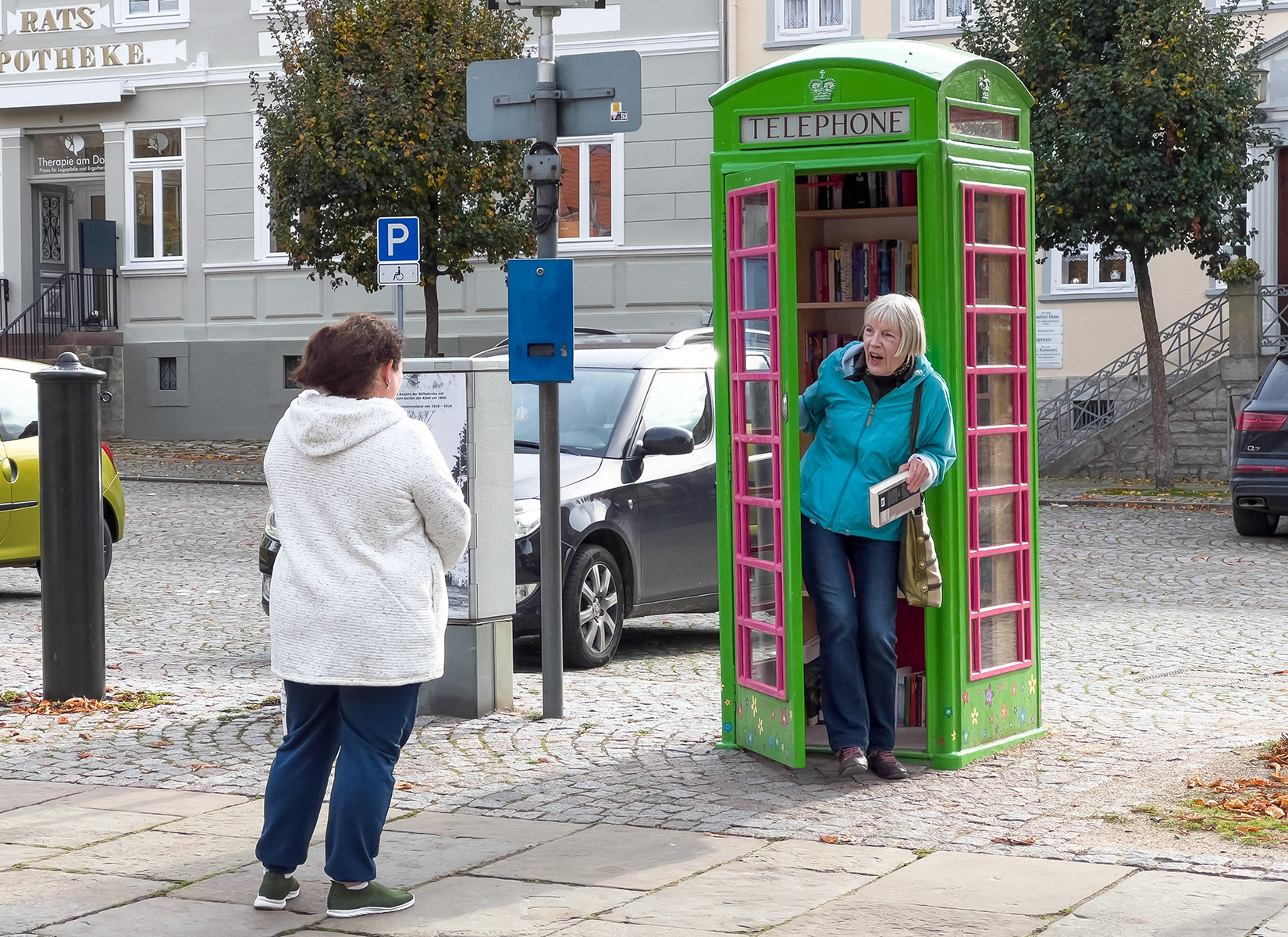
The telephone box was given a completely new look, painted in vibrant green with a soft pink window frame. The colours were carefully chosen to carry a message that felt particularly important at the time: hope.
“With everything that had happened in recent years, from the war in Ukraine and environmental crises to the lasting effects of the COVID pandemic, hope became a driving force,” said Byford. “It gave us the strength to continue and to face adversity with resilience.”
Green symbolised renewal and growth, while pink brought a gentler touch, representing compassion, optimism and new ideas. Together, the colours reflected the spirit of the Landesgartenschau and the power of nature to heal, inspire and bring hope during uncertain times.
Once again, the box had changed. This time, it had blossomed.
The Landesgartenschau was postponed due to the COVID pandemic and eventually took place in 2023.
With the bench from the 2023 State Garden Show now permanently installed alongside the telephone box in the heart of Bad Gandersheim, Two Voices, the decade long project by artist and photographer John Byford, has reached a very special point in its story.
Both the box and the bench have their own history, but together they have become part of something much bigger. They continue the connection between Skegness and its German twin town through art, stories and, most importantly, people.
There is also a rather wonderful coincidence.
Both now carry words by Alfred, Lord Tennyson, one of England’s best known poets. While reading more of Tennyson’s work, Byford discovered that he had written a poem called The Two Voices. After so many years of using the same name for the project, the connection seemed almost too perfect to be true.
“Tennyson was born just up the road from where I live,” says Byford. “Including his words felt not only appropriate, but personal.”
The colour also has a connection to Skegness.
“When visitors come to Skegness for their holidays, they hope for blue skies without clouds to spoil the view,” says Byford. “That’s the colour I chose for both the box and the bench this time. It’s the colour of the perfect seaside day.”
The restored telephone box, once red and now blue, continues its life as a community library, inviting people to browse, read and share. Nearby, the bench that once stood on the Skegness seafront offers somewhere to sit, rest and perhaps have a conversation.
Whenever Byford returns to Bad Gandersheim, there is something particularly rewarding about seeing both of them not simply being looked after, but actually being used and enjoyed by the local community.
People take books from the box. They sit on the bench. They stop and talk. Sometimes strangers meet.
Perhaps that is what Two Voices was always meant to be about.
As the project enters its second decade, what began as a conversation between two towns continues to grow. The box has changed colour many times and its purpose has evolved, but the idea behind it has remained remarkably simple: bringing people together.
A bench. A box. A few words of poetry.
And the conversation continues.