TWO VOICES
Connecting Bad Gandersheim with Skegness through art, culture and conversation
For more than a decade, artist John Byford has used art to strengthen the friendship between Skegness and its twin town, Bad Gandersheim in Germany. At the heart of that journey is Two Voices.
The project began with a simple idea: take something instantly recognisable as British, an old red telephone box, and give it a new purpose. A place once designed for conversation could become a different kind of communication between two towns, two countries and two communities.
The idea was unanimously approved by Bad Gandersheim City Council in 2014, and the telephone box arrived in the town the following year. Since then, Two Voices has never stood still. The box has changed colour, changed purpose and carried messages of friendship, remembrance, hope and reconciliation. It has become an exhibition space, a memorial and a community library.
Along the way, the project has grown beyond the box itself, bringing a Skegness garden to Germany, giving an historic seaside bench a new home and, most recently, sharing the faces and voices of 23 women from Skegness.
What began as an artwork has become something much more difficult to define. Perhaps that is the point. Two Voices is about communication, but above all, it is about people: two towns, two countries and a conversation that continues.
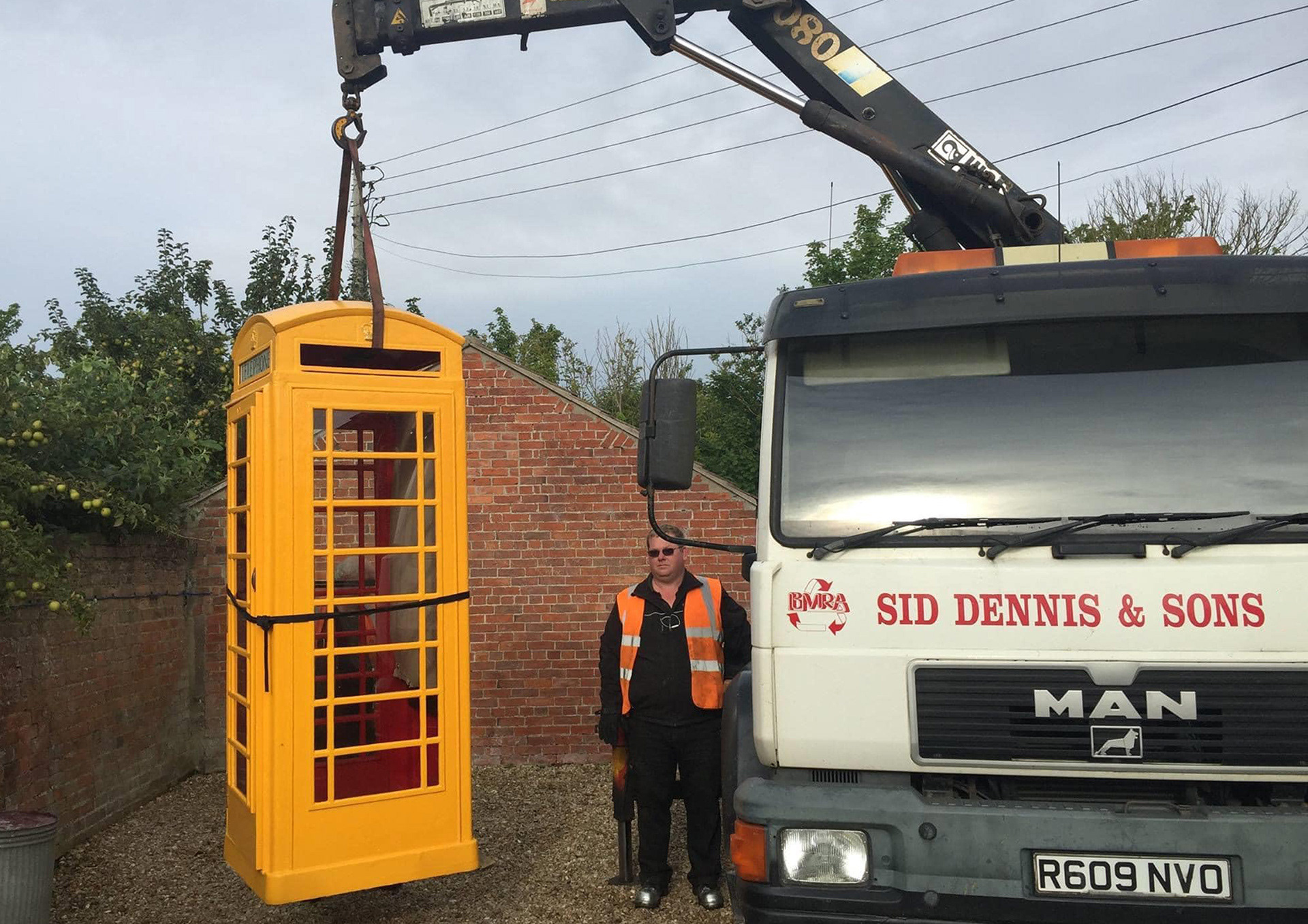
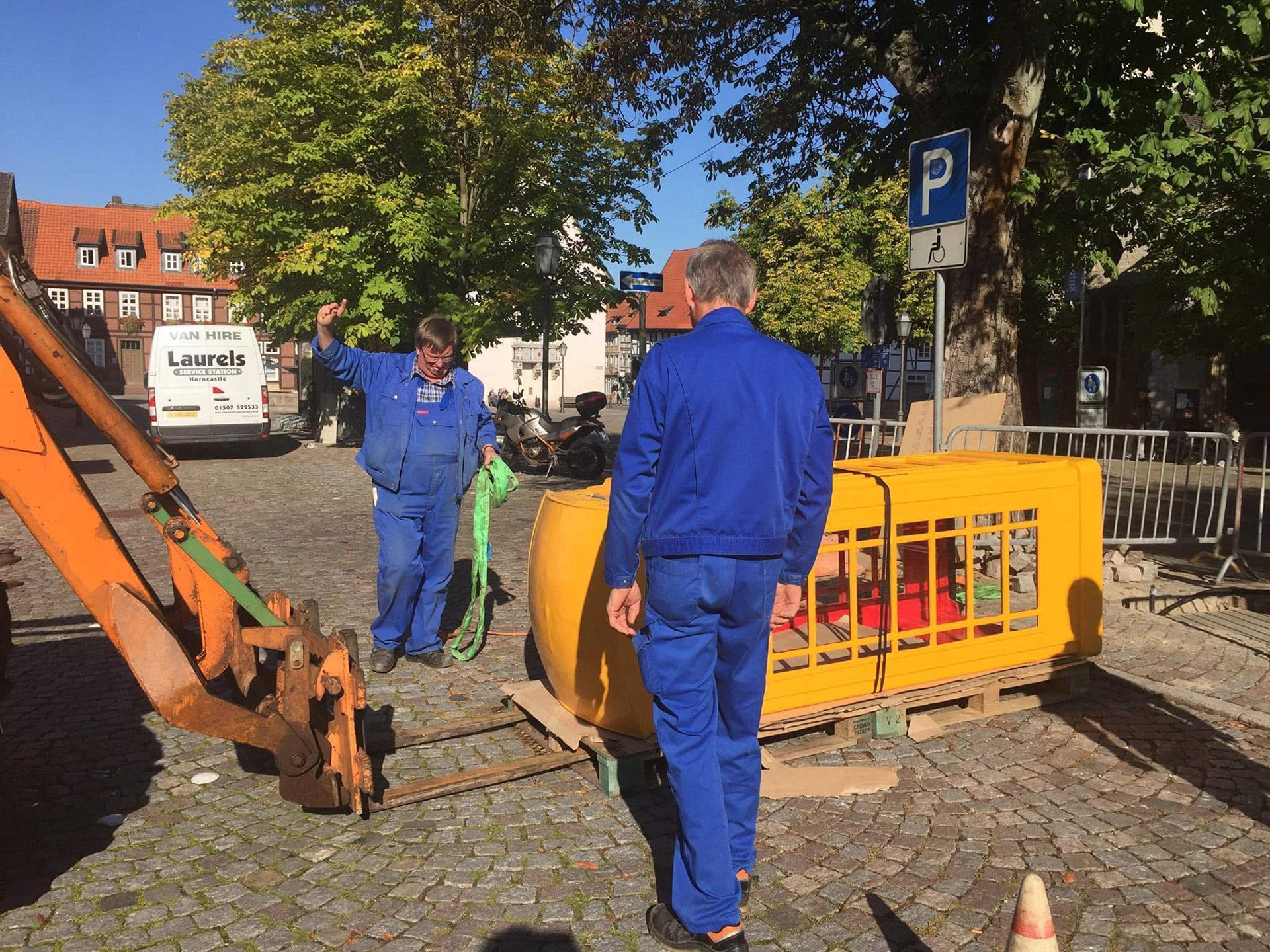
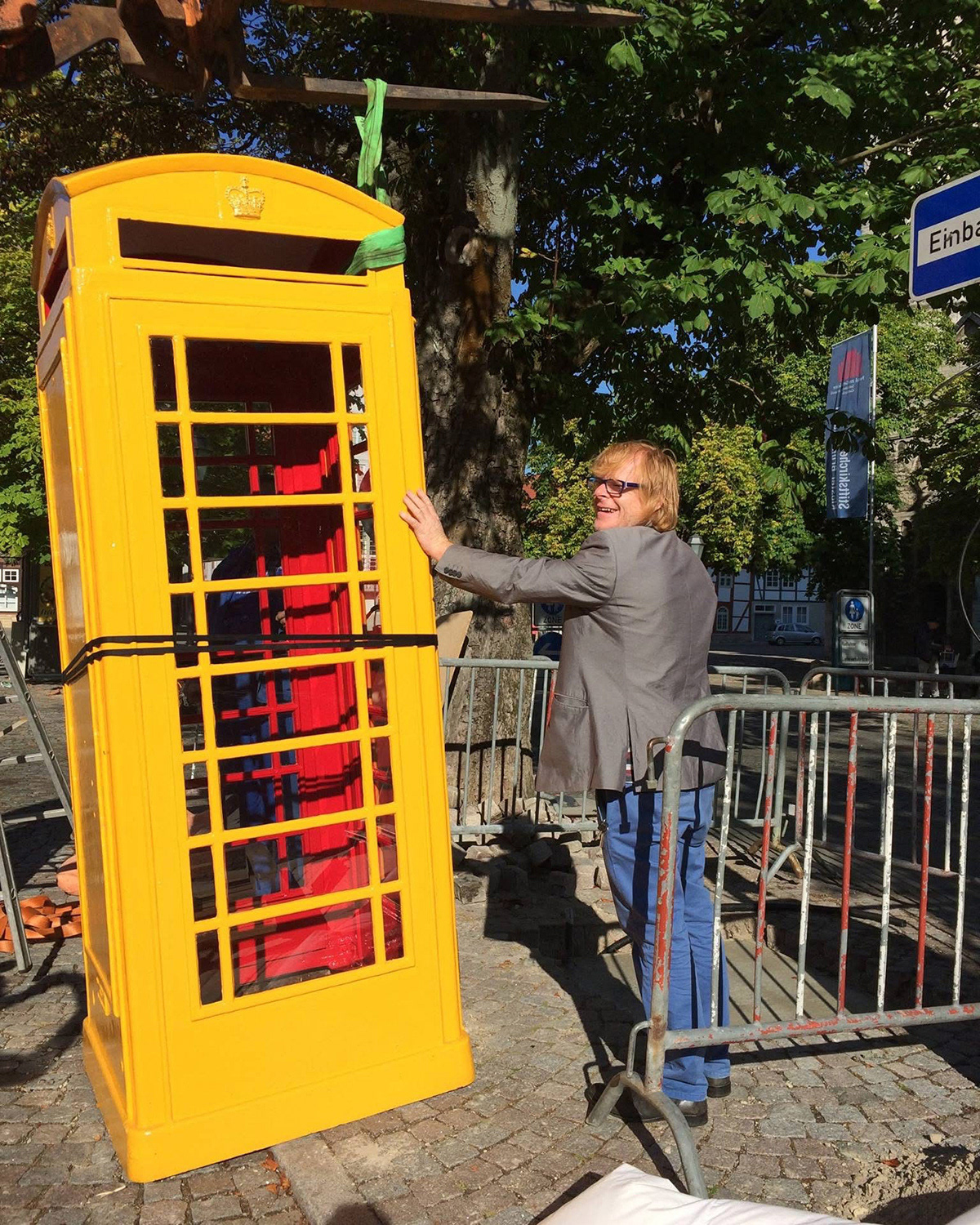
POST IT! ~ 2015
In September 2015, a beautifully restored British telephone box made its quiet arrival in Bad Gandersheim. But this was no ordinary red telephone box. It was golden yellow, a colour chosen to echo the warmth of the Skegness sands and the glow of a summer's day on the Lincolnshire coast, bringing a little piece of the seaside to the centre of its German twin town.
Inside, visitors discovered a photograph of Skegness alongside a collection of colourful seaside postcards. People were invited to take one, write a message and send a few words across the miles.
Post It! was born from a desire to breathe fresh life into the idea of town twinning. It should not simply be something written on a sign at the entrance to a town, but a genuine exchange between people. The telephone box seemed the perfect place to begin. Once a place where people picked up a receiver and spoke to someone miles away, it could now connect people in a completely different way.
There was something rather special about using postcards too. Even as communication became increasingly digital, a handwritten message still carried something personal. Postcards were kept. They found their way onto mantelpieces, noticeboards and fridge doors, becoming small fragments of another person and another place that remained long after they arrived.
The telephone no longer rang, but the lines of communication were open again. The box had been born again.
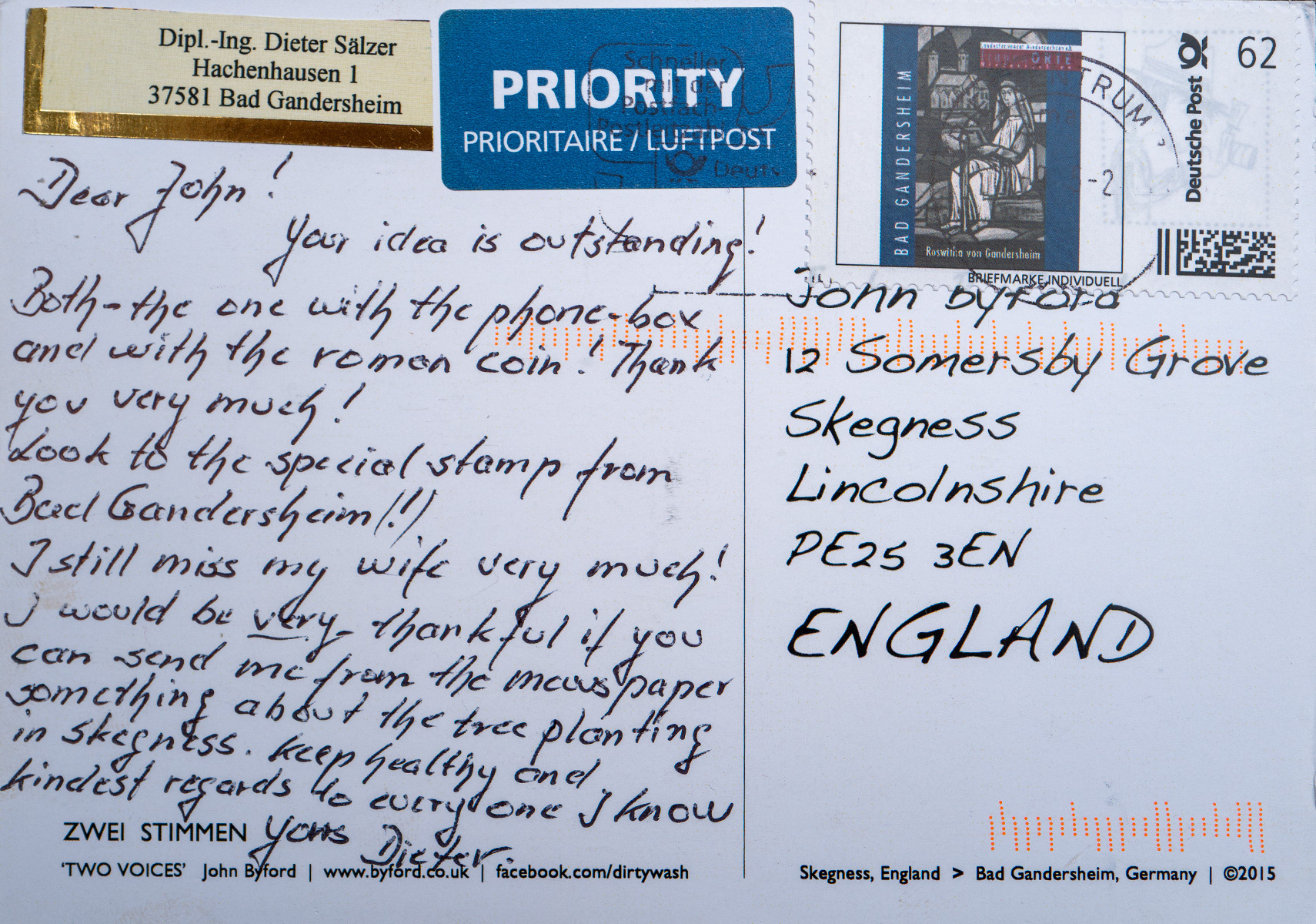
Postcard from The Box
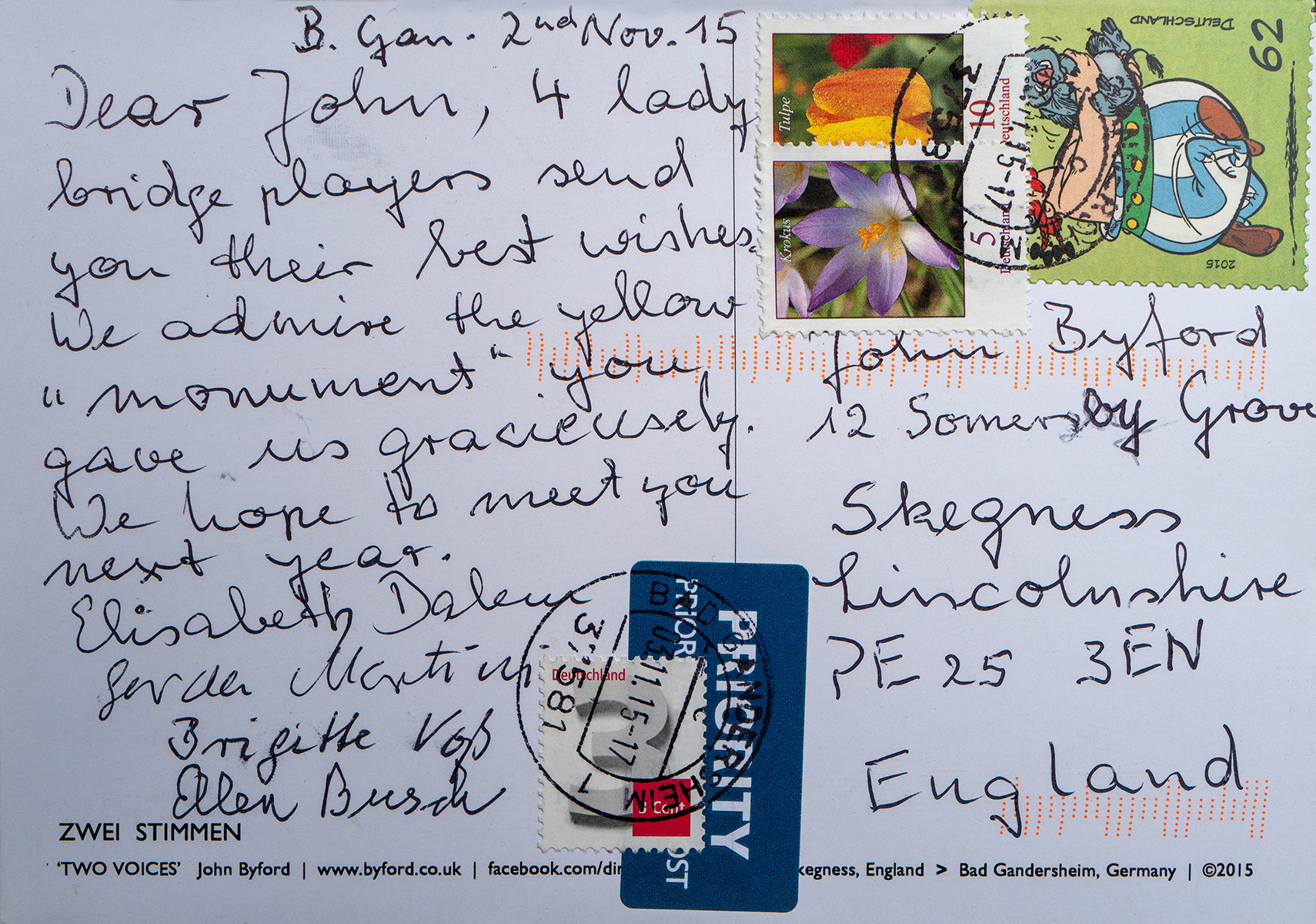
Postcard from The Box
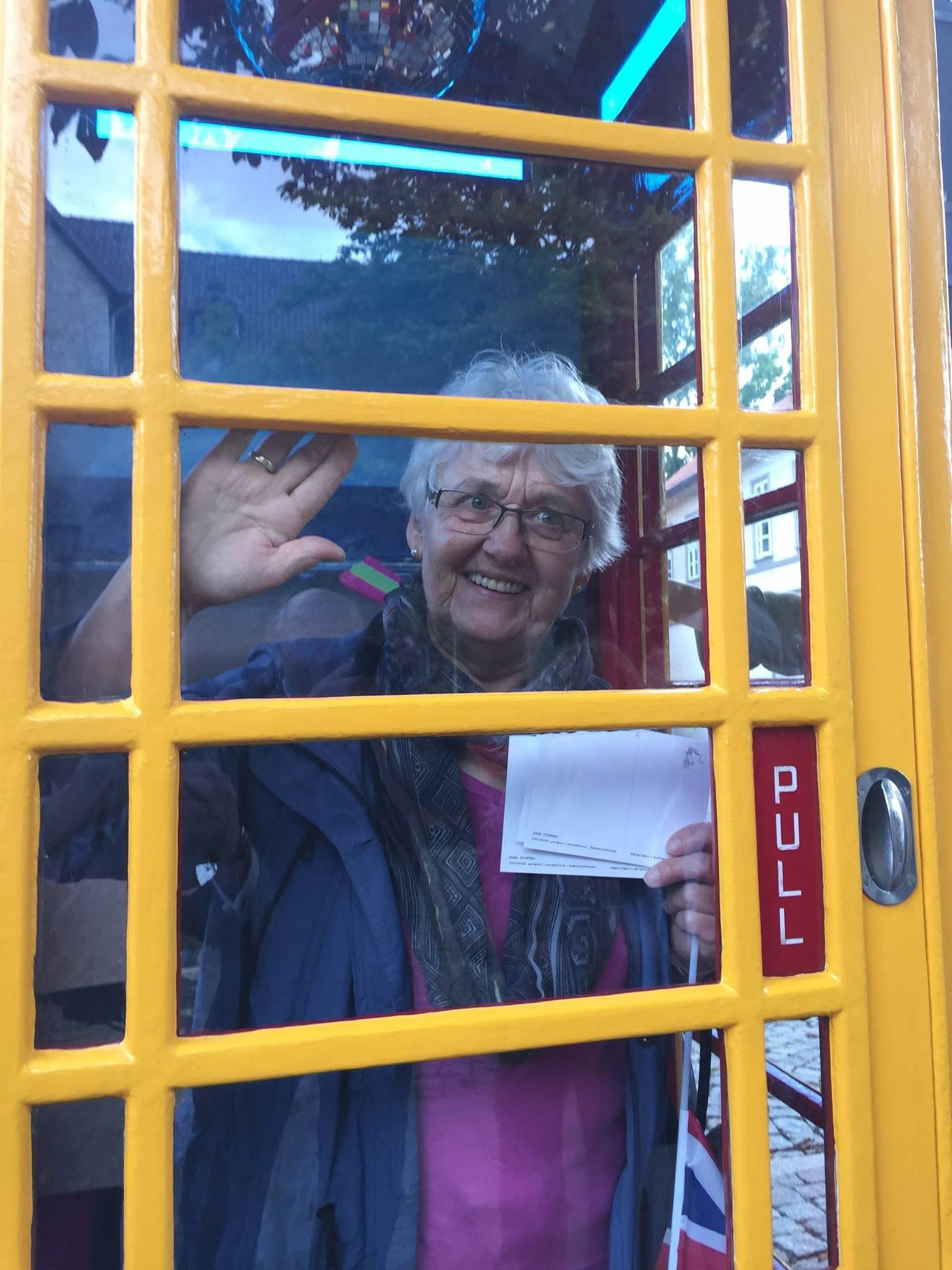
Postcards from The Box
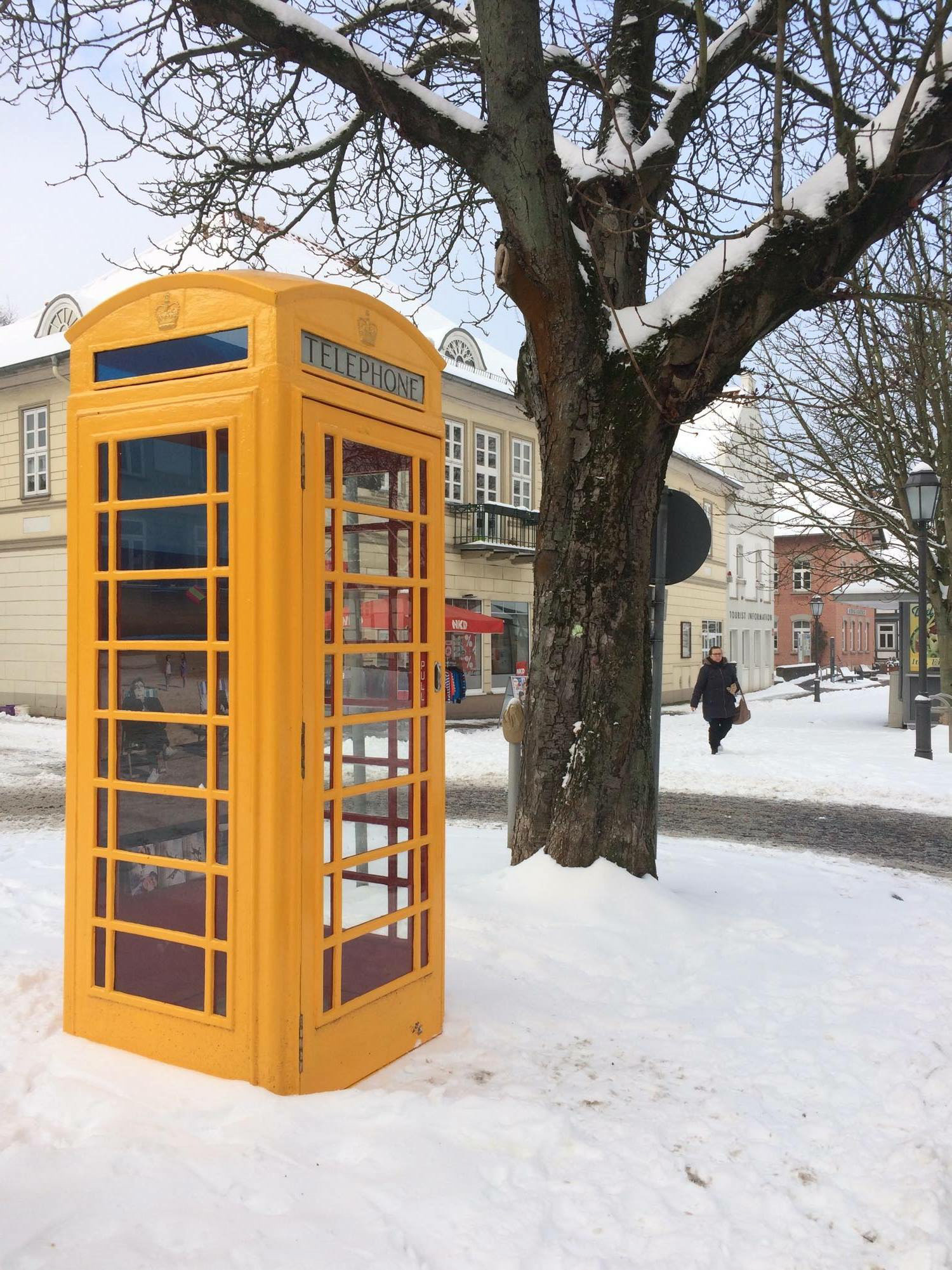
The Box - Two Voices
WE WILL REMEMBER THEM ~ 2018
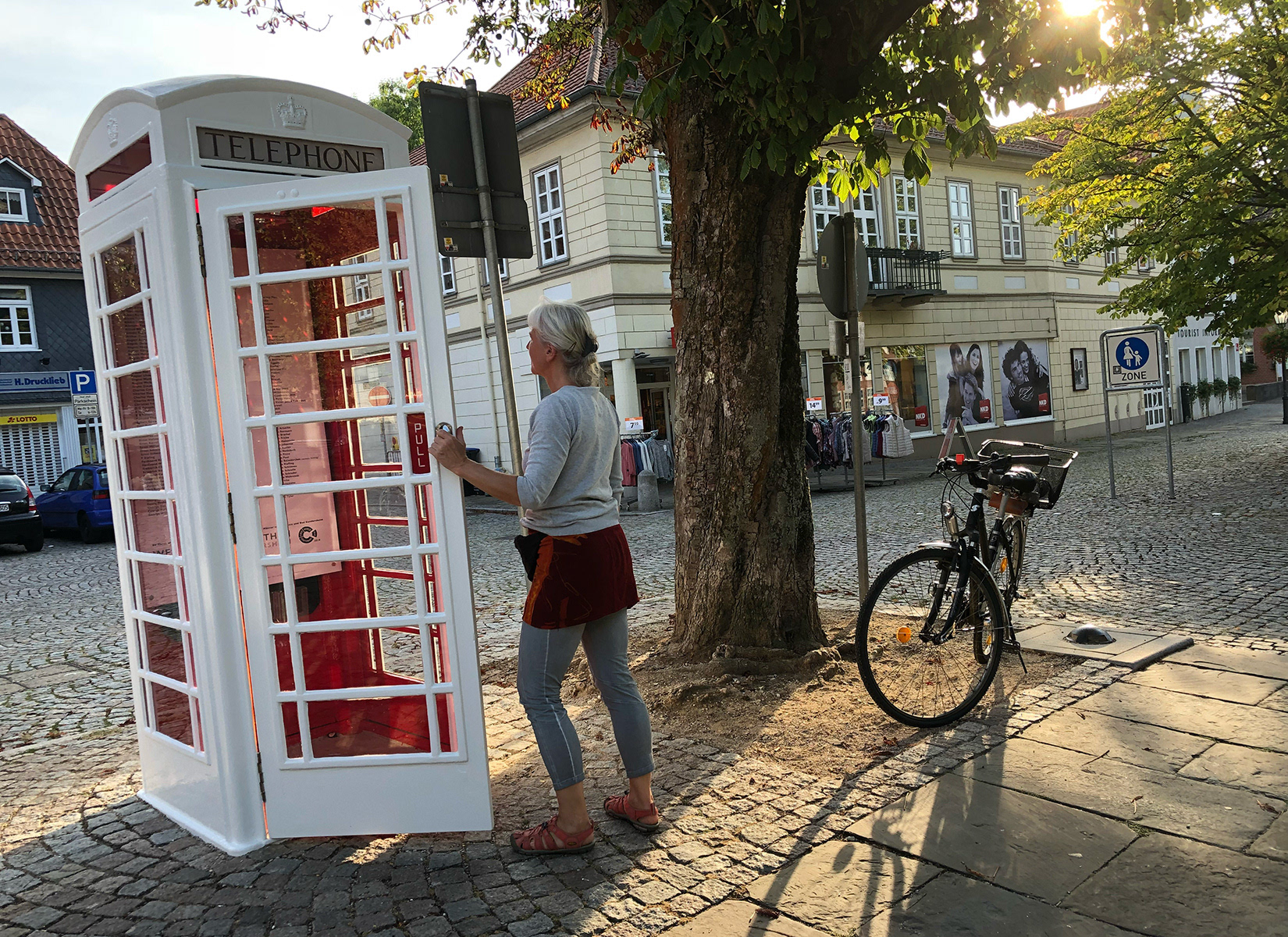
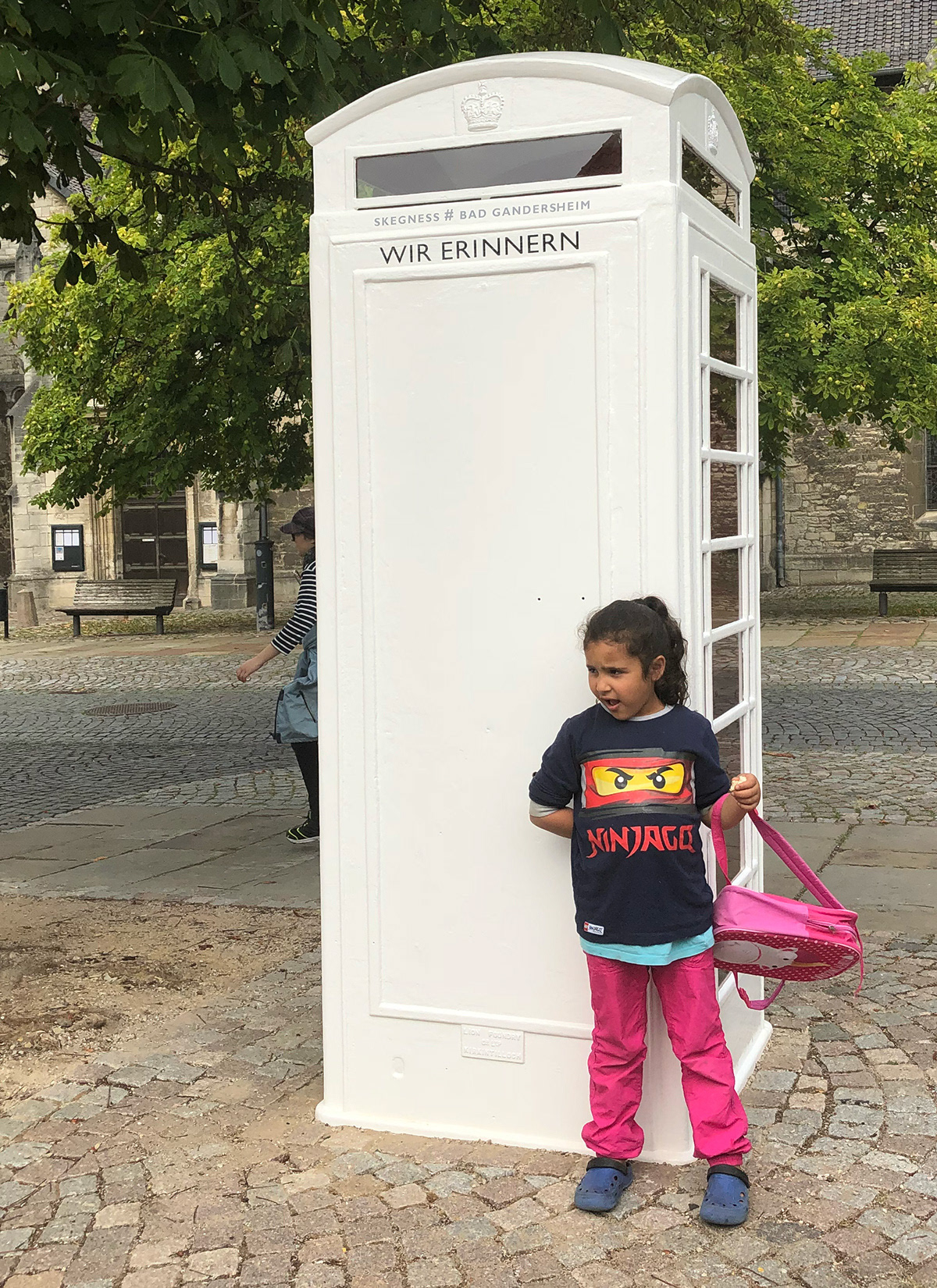
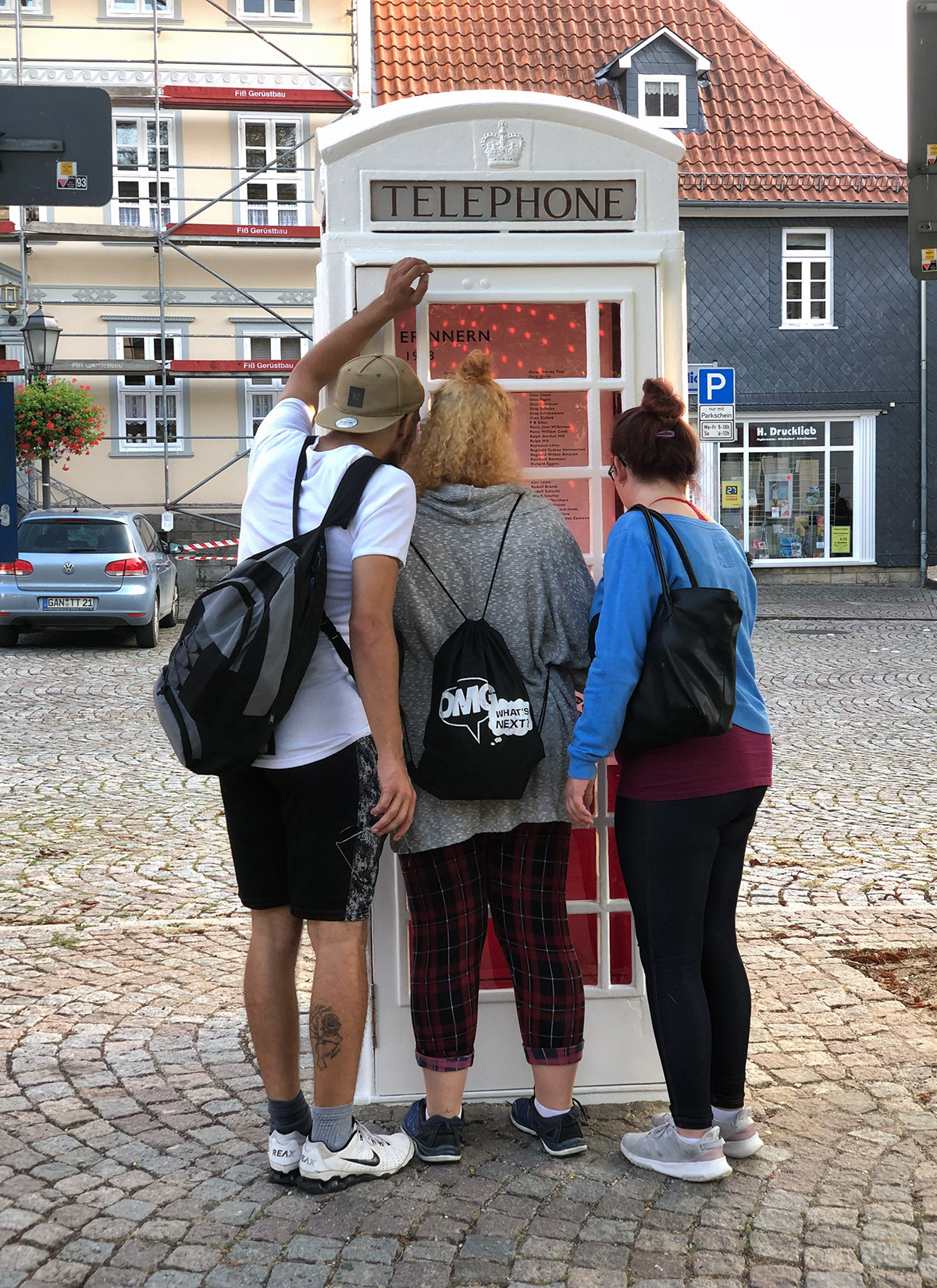
Three years later, Two Voices took on a very different voice. To mark the centenary of the end of the First World War, the telephone box was transformed into a place of peace and remembrance, honouring the young men from both Skegness and Bad Gandersheim who had lost their lives between 1914 and 1918.
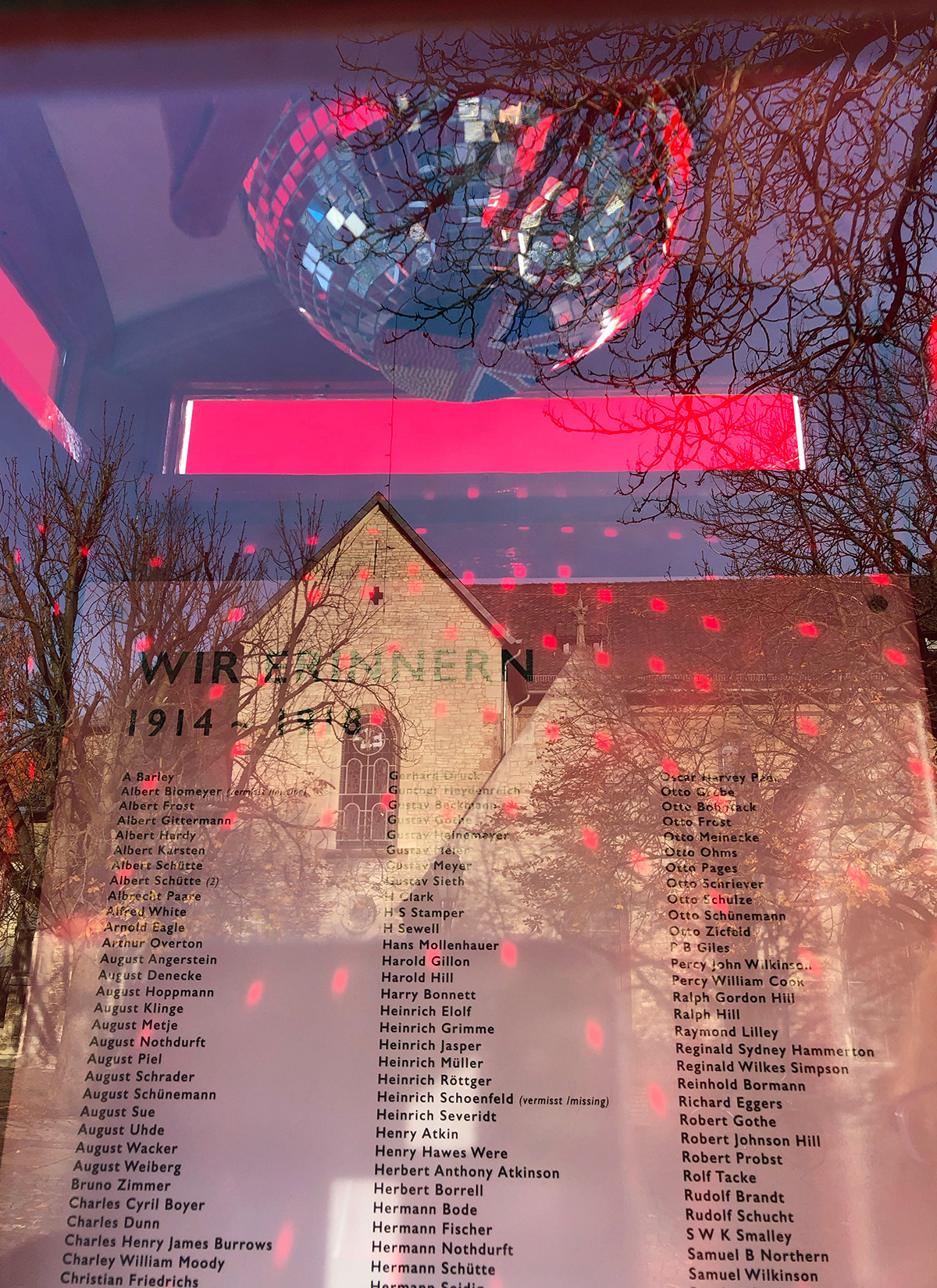
This time, the box was painted white and carried the names of 186 young men from the two towns. They were displayed together, without separation by nationality, reflecting a simple truth that grief has no borders.
As daylight faded, a red glass panel and mirror ball cast fragments of red light across the names, resembling droplets of blood. What had once been a tool of everyday communication had become a quiet place of memory, reflection and reconciliation.
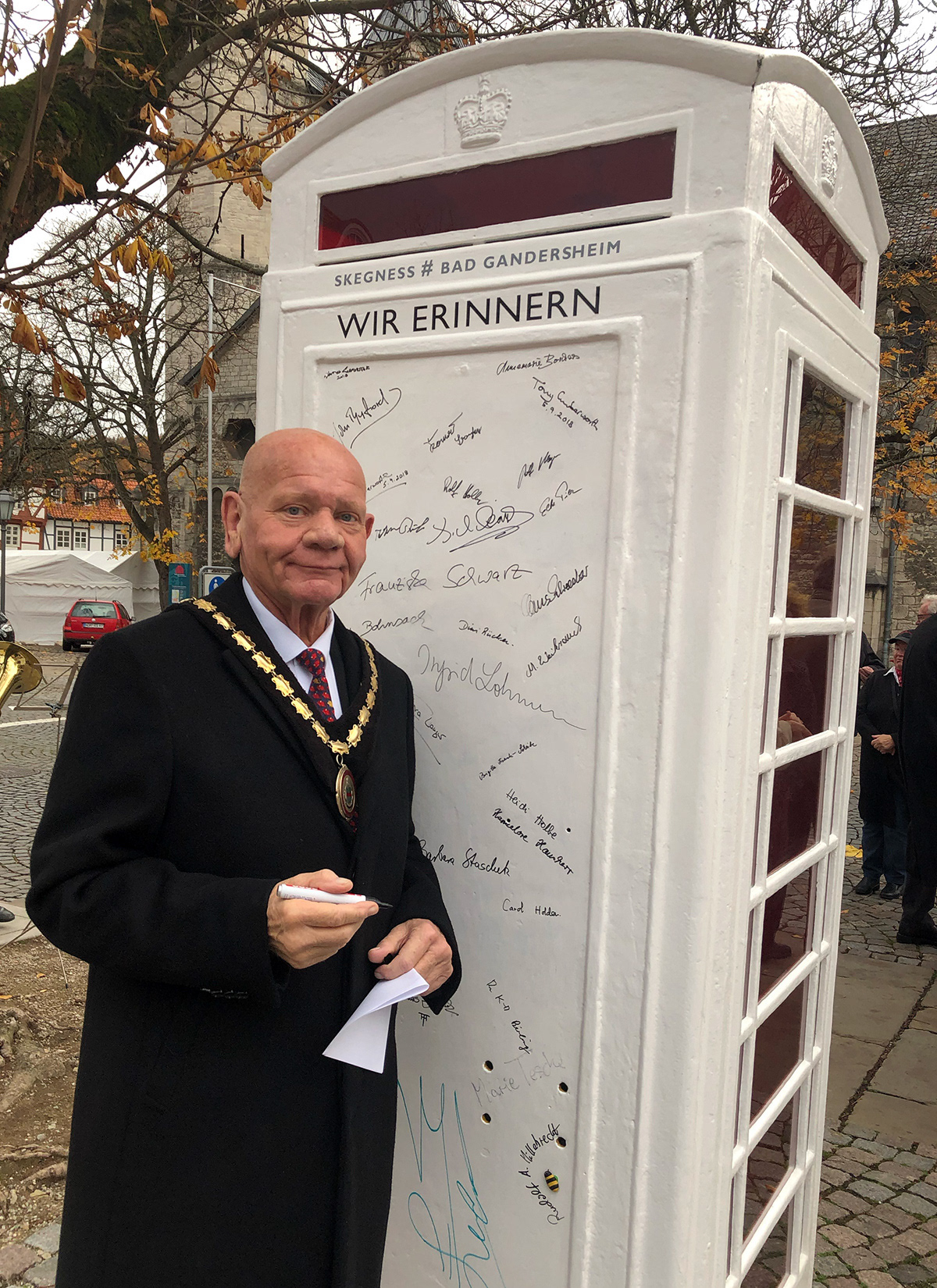
The Mayor of Skegness, Councillor Sid Dennis, travelled to Bad Gandersheim after attending the Remembrance Sunday parade at home. There, alongside Bad Gandersheim Mayor Franziska Schwarz, he took part in a special ceremony during which all 186 names were read aloud, one by one, giving each of them a voice again.
Two Voices had begun as a celebration of friendship between two communities. We Will Remember Them showed that the same friendship could also provide a place to remember a shared and painful past, with two towns and two sides remembering together.
BREXIT ~ 2019
In 2019, the conversation changed again. As the United Kingdom prepared to leave the European Union, Two Voicesresponded not with a message of division, but with one of continuing friendship. Whatever was changing politically, the relationship between Skegness and Bad Gandersheim did not have to change with it.
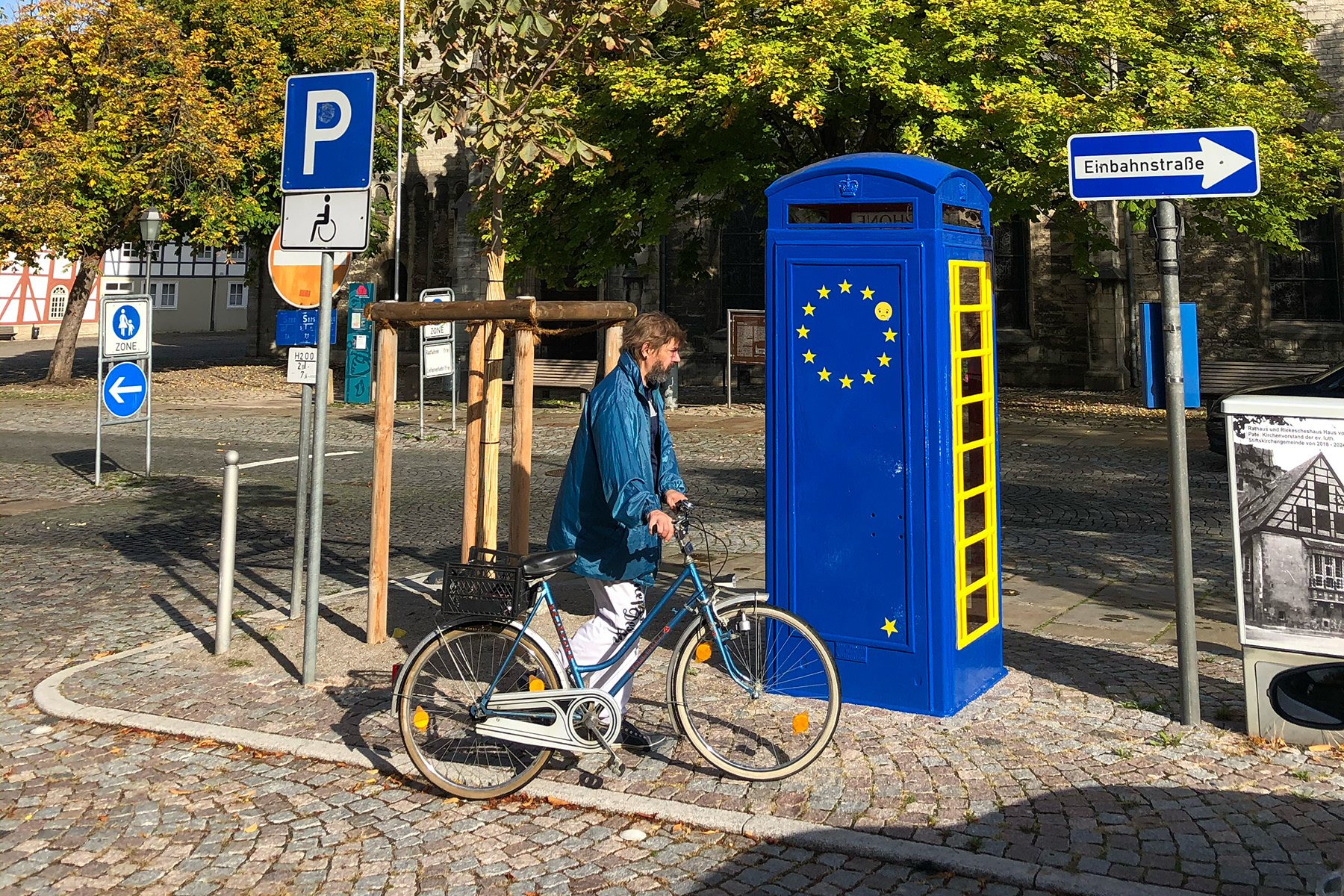
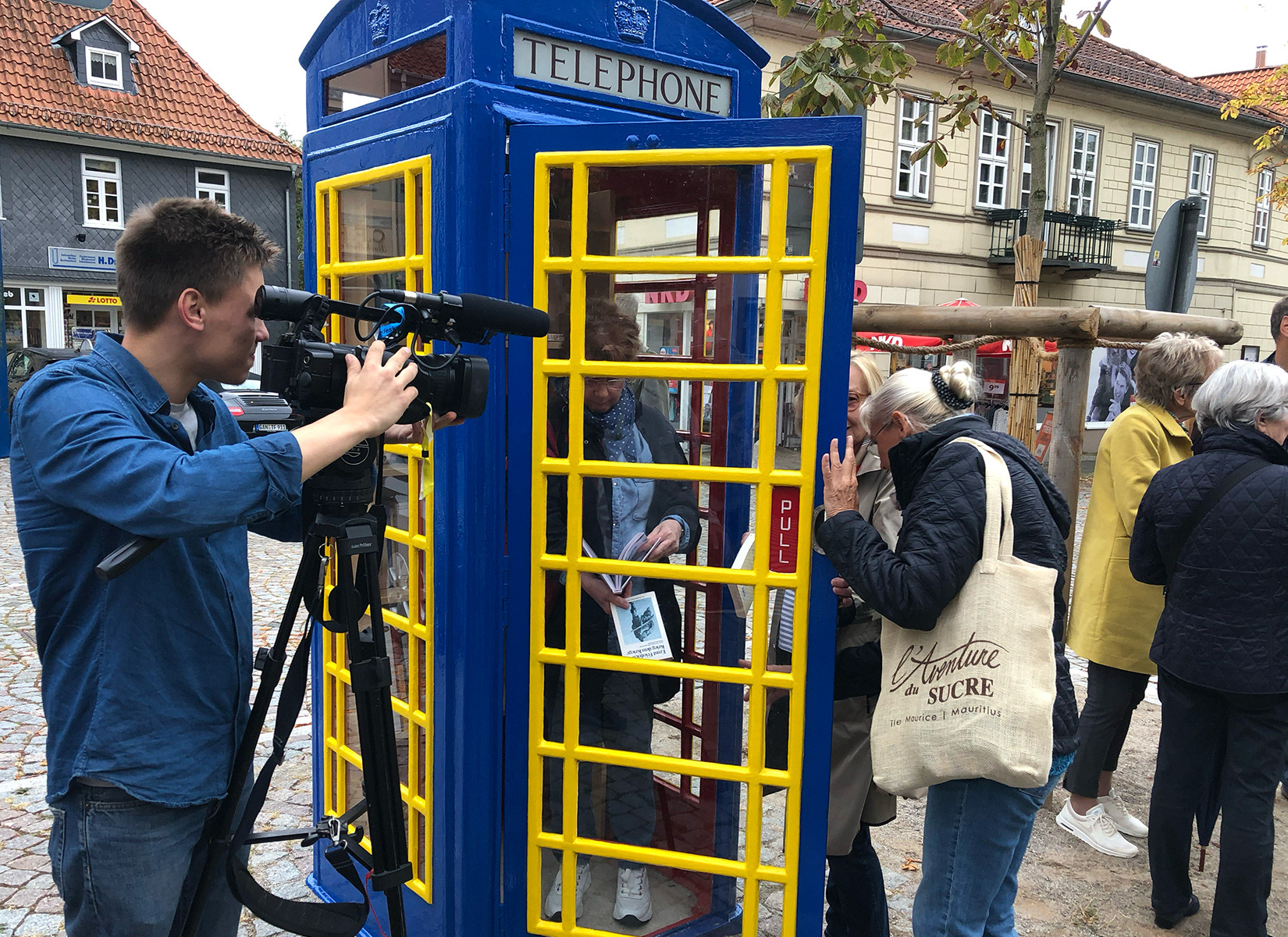
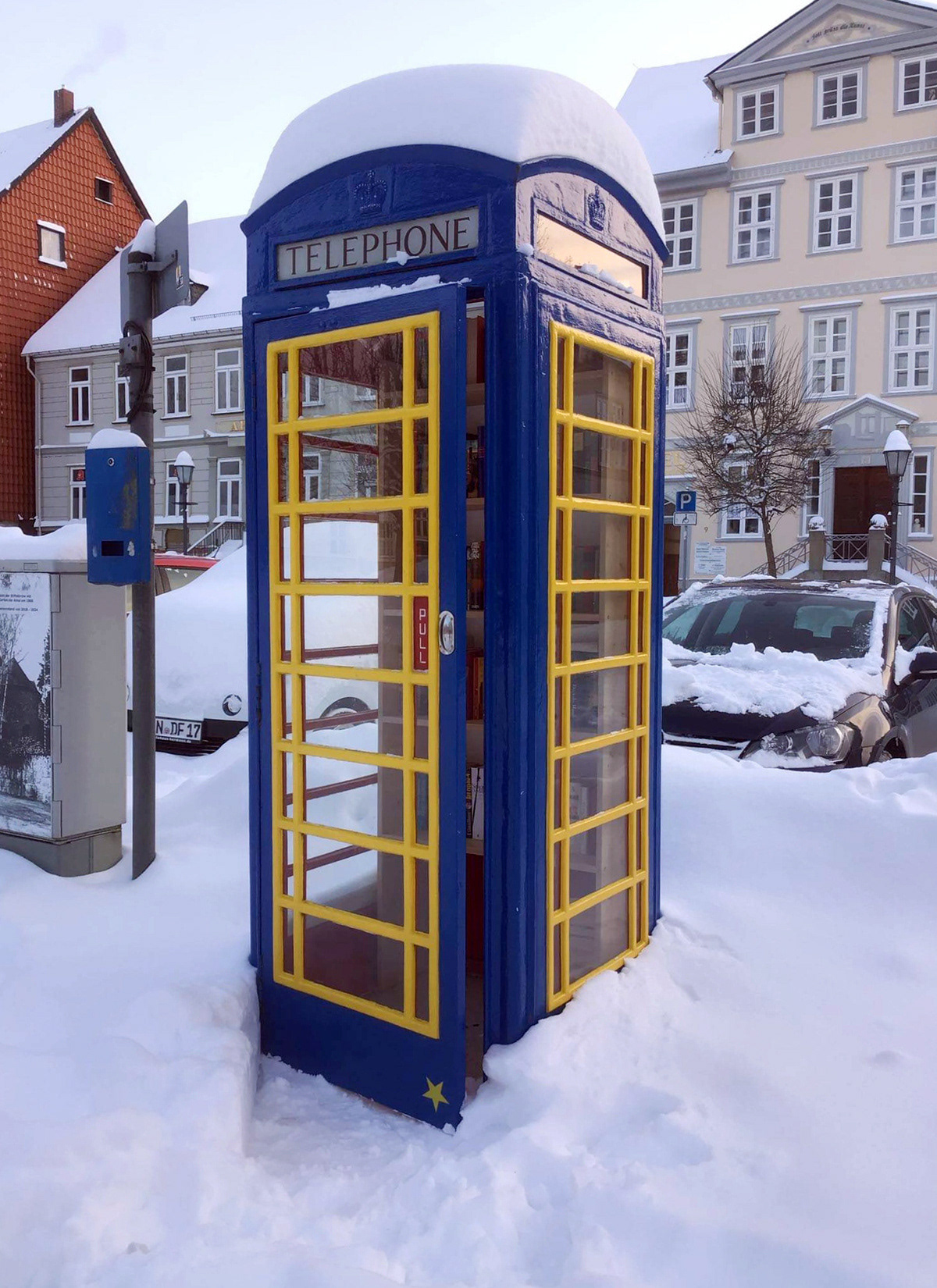
The telephone box was repainted in the familiar blue and gold of the European Union, but there was one important difference. Britain's star had fallen. In the space it had occupied sat a small sad emoji, a deliberately simple and very modern expression of sadness, while the missing star lay on the pavement below. Britain might be leaving the European Union, but friendship did not have to leave with it.
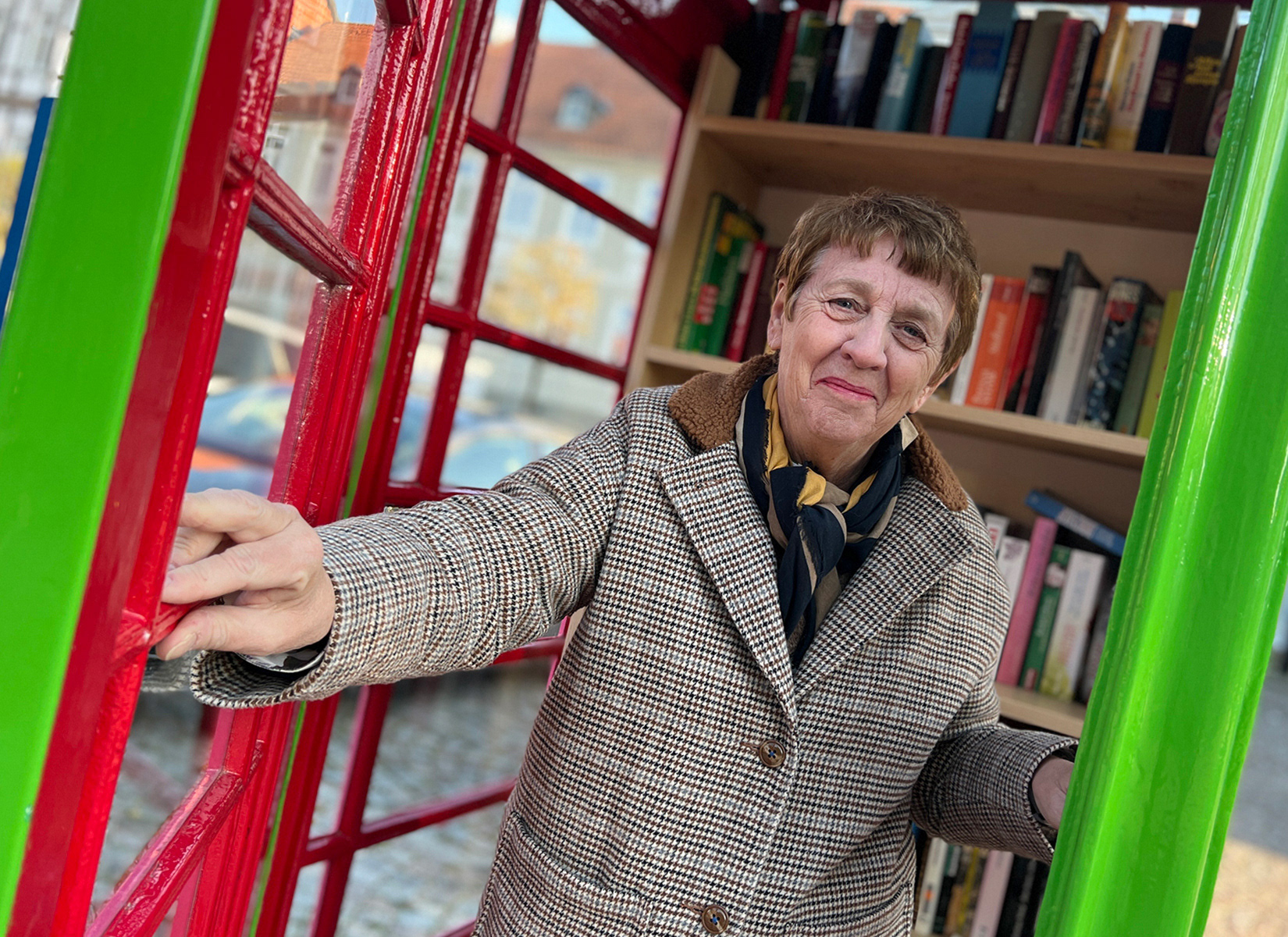
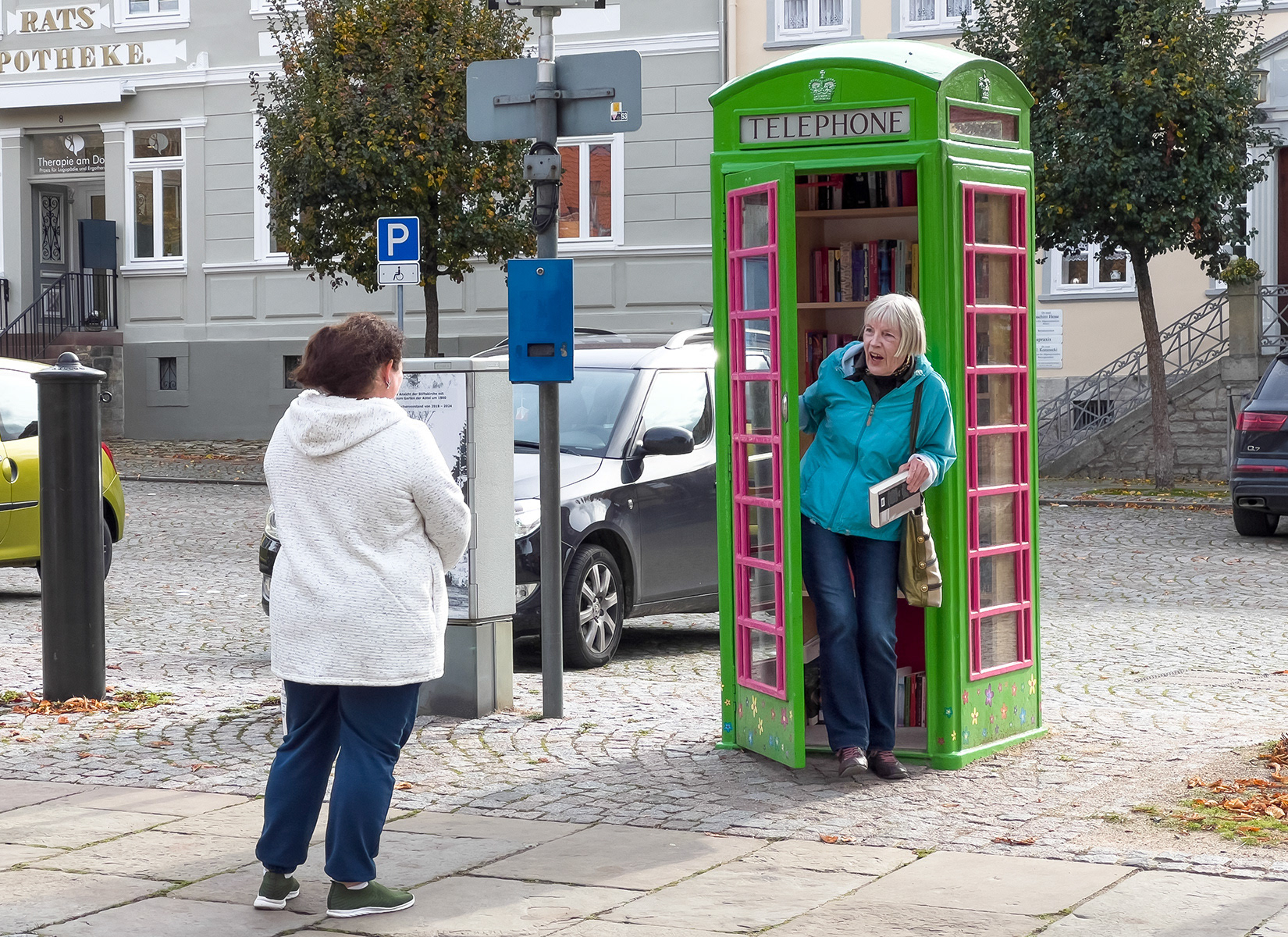
The box also found another voice as it became a community library, filled with books that people could freely take, read, return and exchange. English and European titles sat alongside one another, turning the installation into a place for books, language, learning and cultural exchange.
Once again, the box had changed its appearance and its purpose, but the idea at its heart remained exactly the same: keeping people talking, sharing and, most importantly, keeping the lines of communication open.
HOPE! ~ 2021
By 2021, the world felt very different. The COVID pandemic had separated families, closed borders and interrupted many of the ordinary human connections we had previously taken for granted. It seemed an appropriate moment for Two Voicesto change once more.
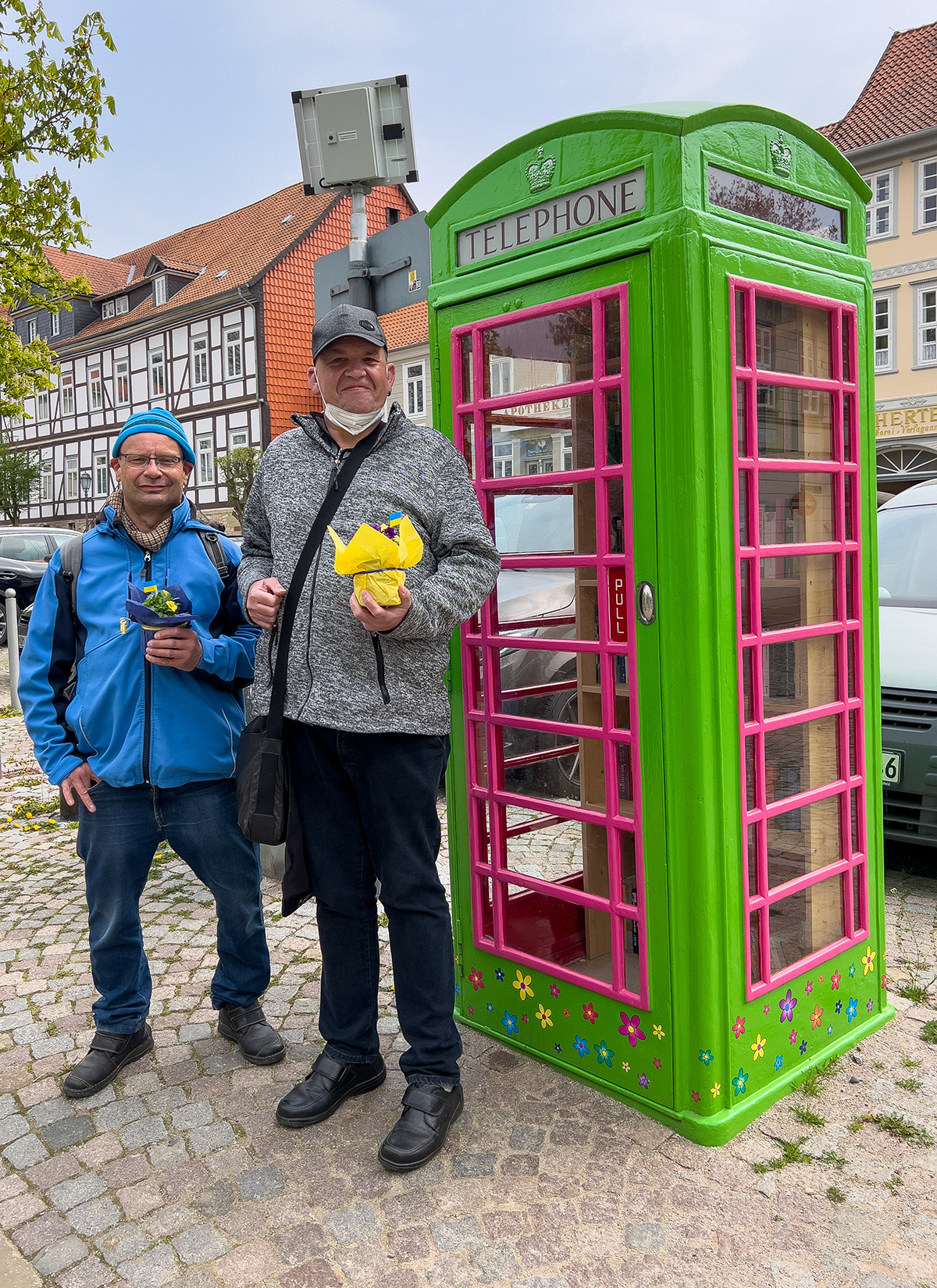
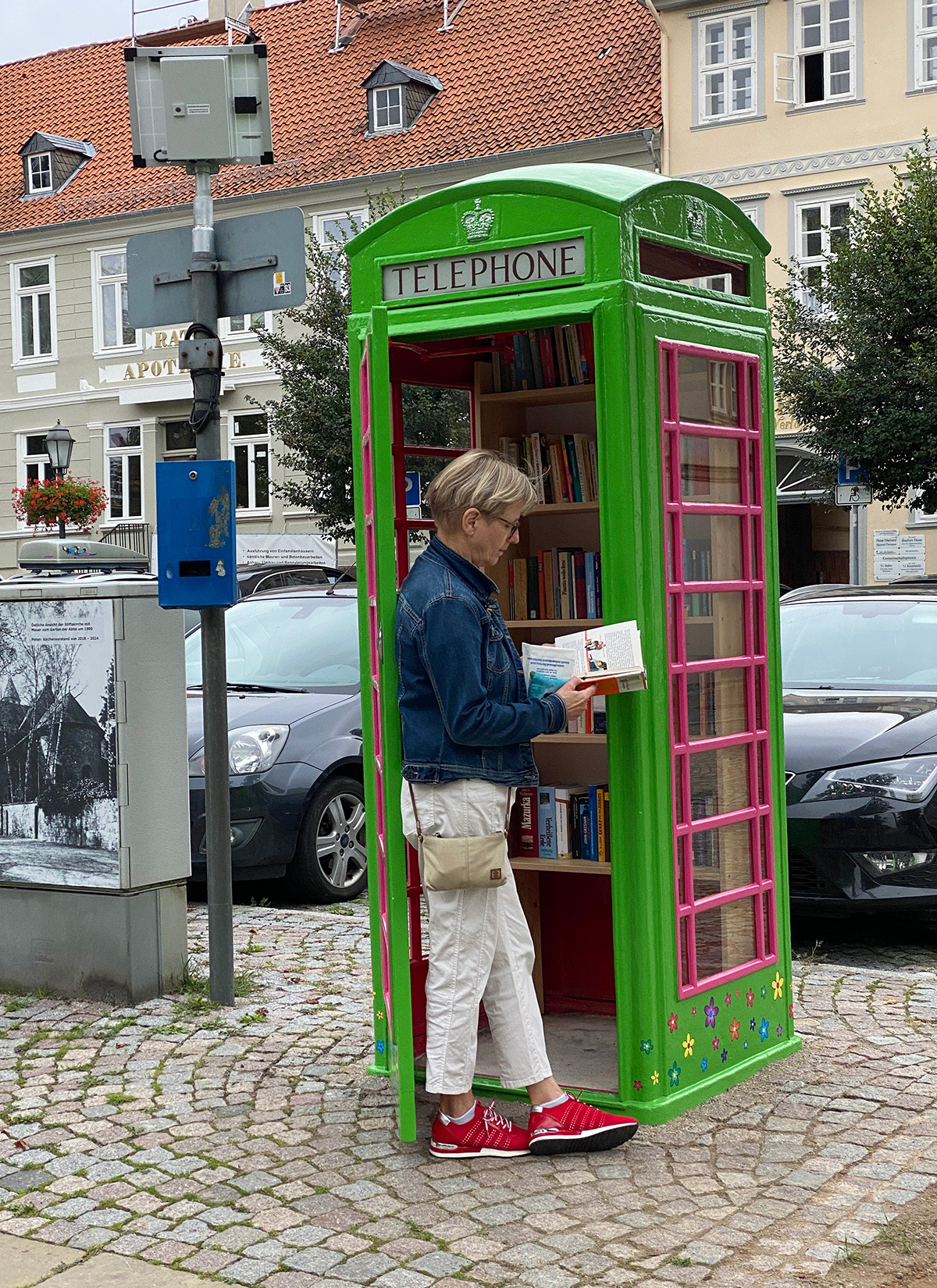
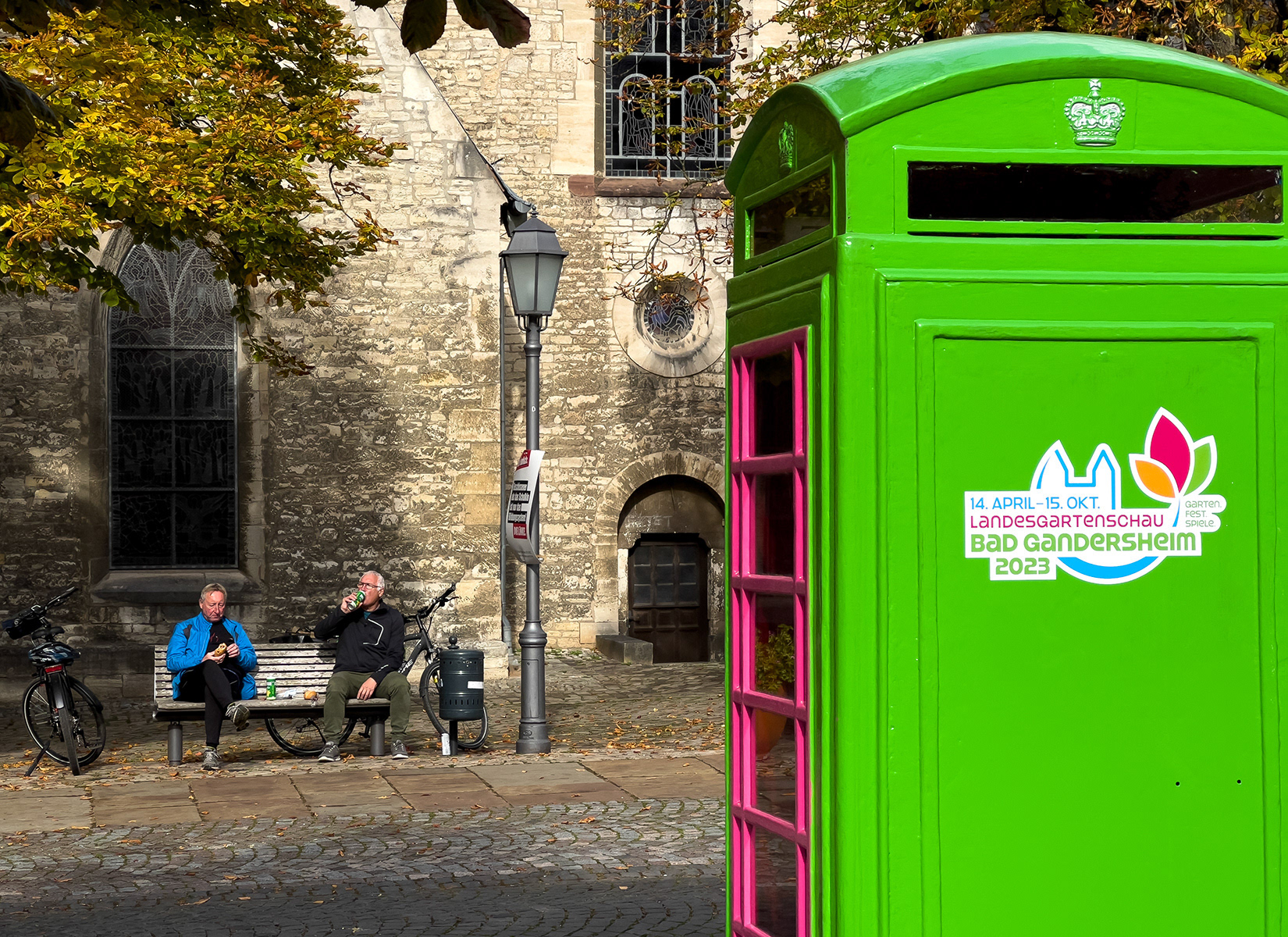
Ahead of Bad Gandersheim's planned Landesgartenschau, the telephone box blossomed into something new. It was painted a vibrant green with a soft pink window frame, carrying a simple message of hope. Green represented renewal, nature and growth, while pink brought warmth, compassion and optimism. Together, the colours looked towards something brighter after an extraordinarily difficult period.
The transformation also looked ahead to the next chapter of Two Voices. The Landesgartenschau would include a garden inspired by Skegness and the Lincolnshire coastline, taking the relationship between the two towns beyond the telephone box for the first time.
The State Garden Show was originally due to open in 2022, but the continuing effects of the pandemic meant it was postponed for a year. The garden, like so many things during that period, would have to wait, but hope remained at the heart of what was to come.
THE LANDESGARTENSCHAU ~ 2023
In 2023, Two Voices stepped out of the telephone box and into the landscape. At Bad Gandersheim's Landesgartenschau, Germany's State Garden Show, a little piece of the Lincolnshire coast appeared in the middle of Germany.
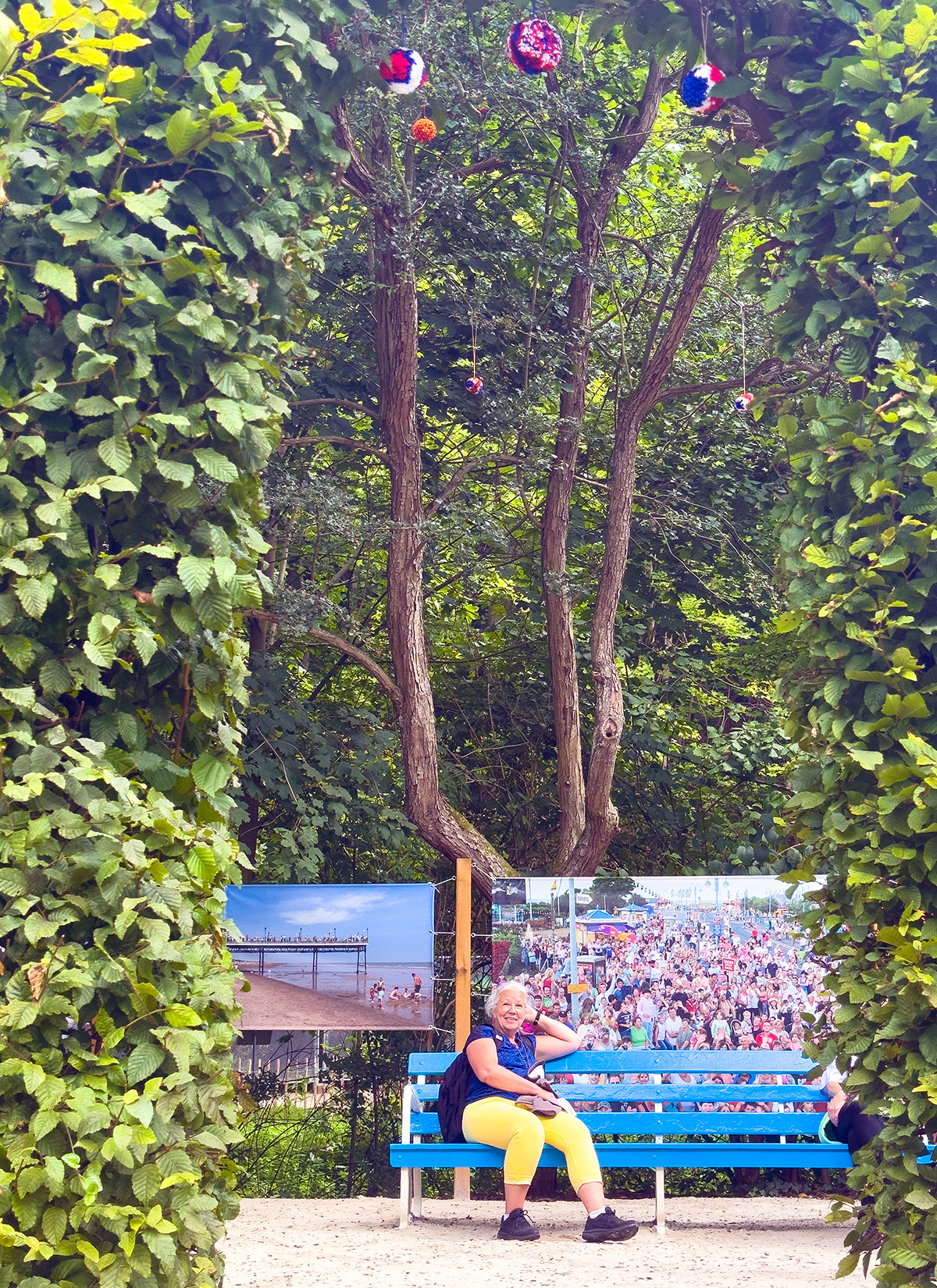
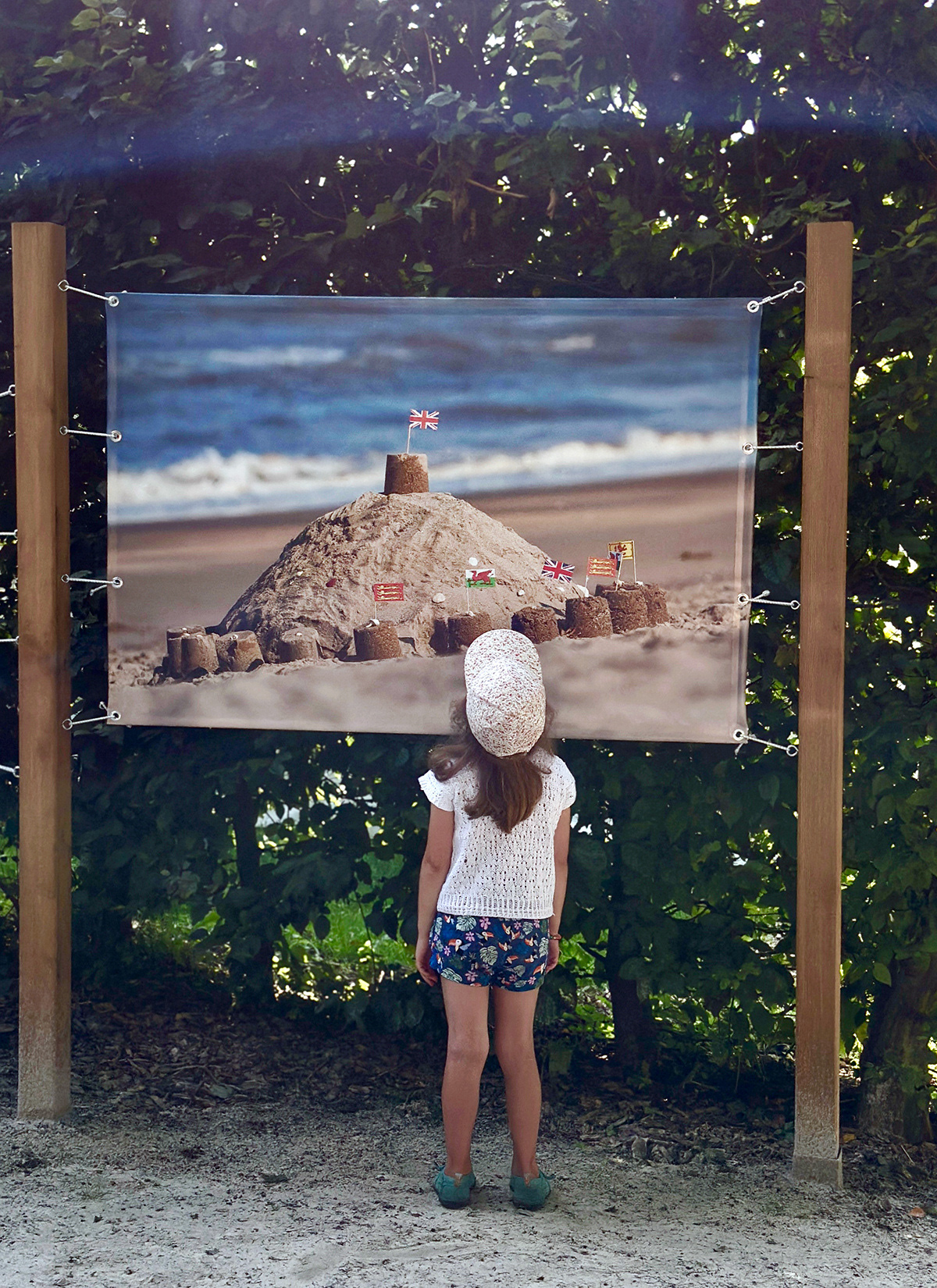
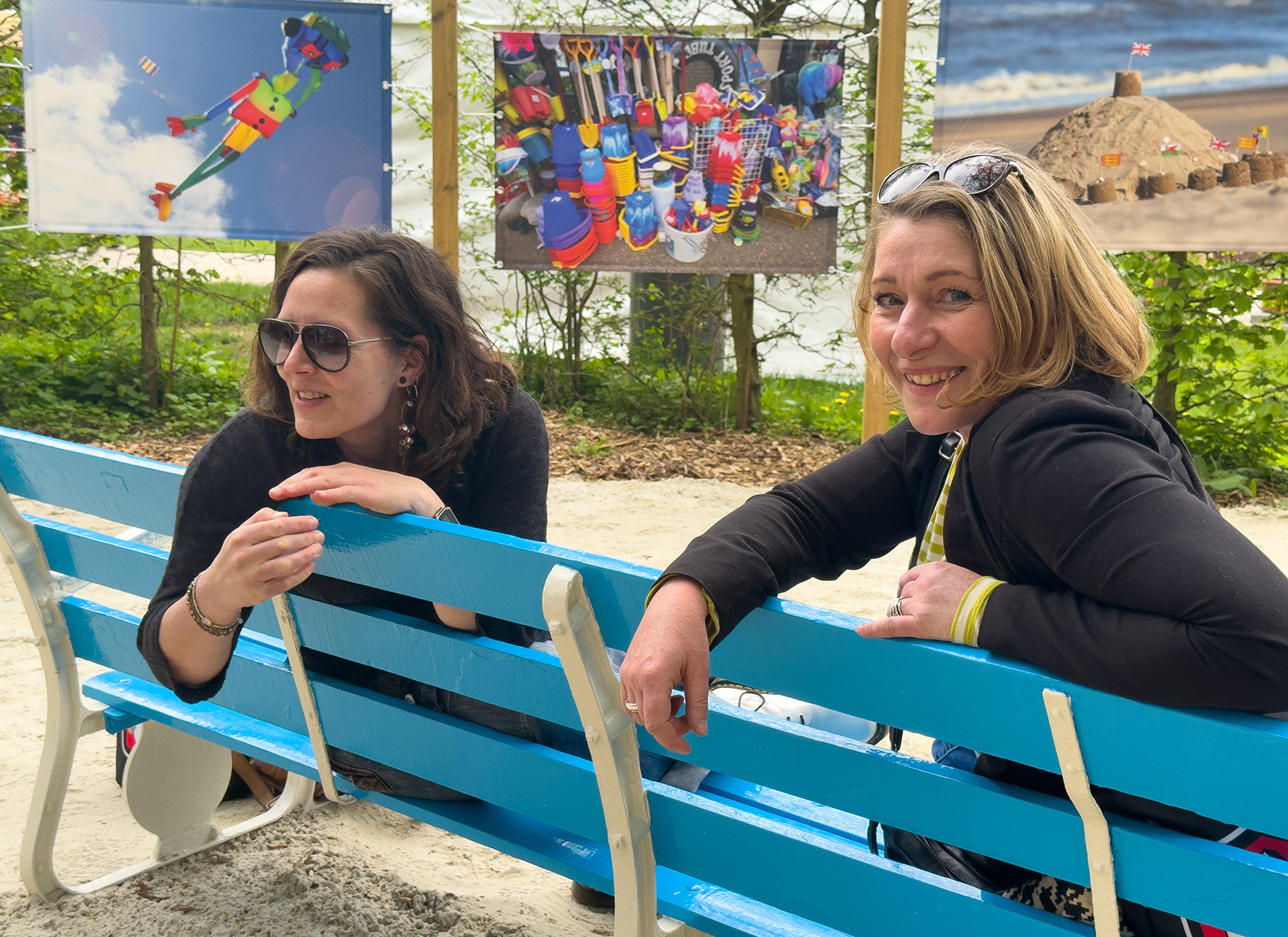
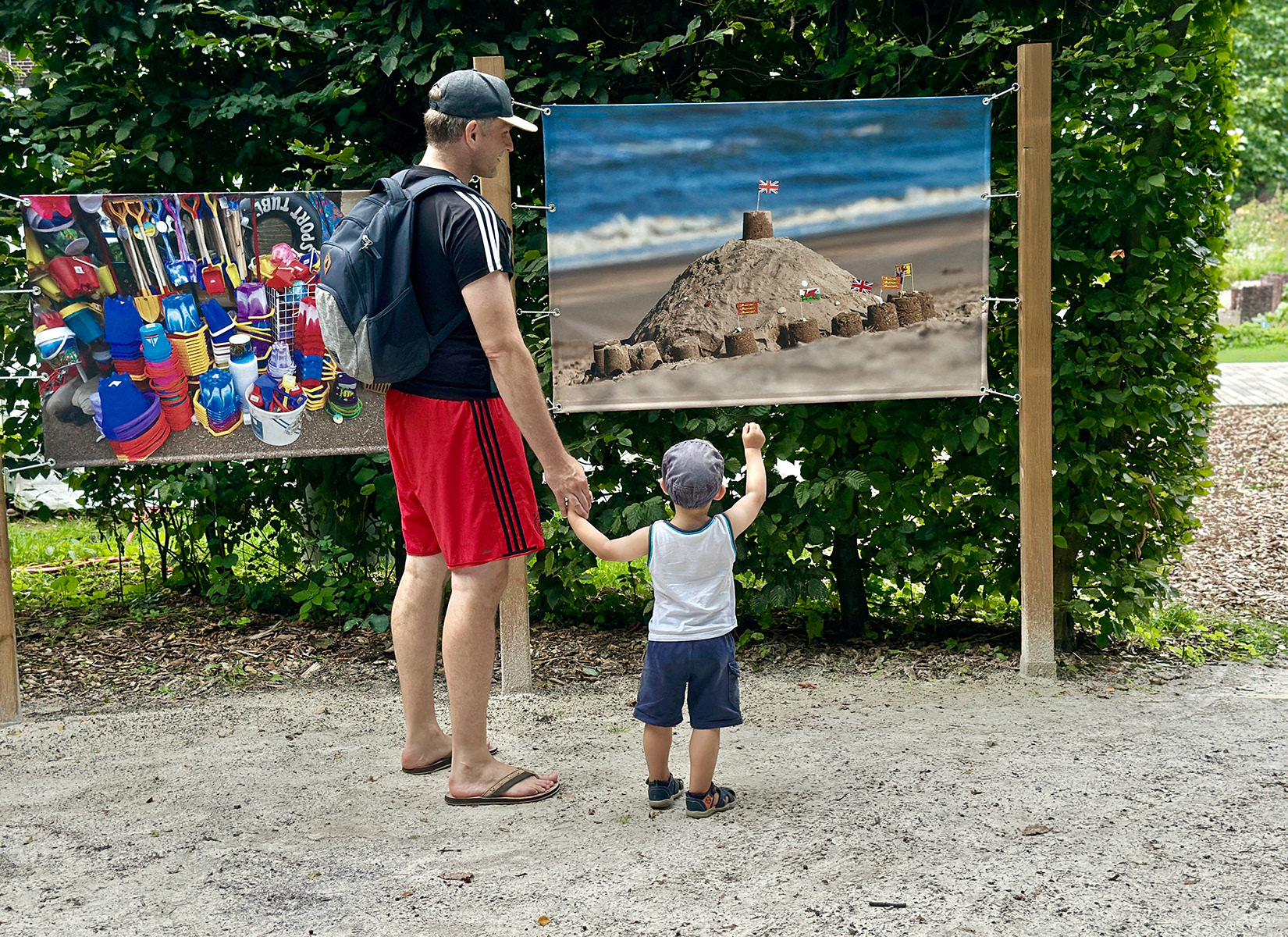
The Skegness Garden was designed to show visitors a quieter and perhaps unexpected side of the seaside town. Fifteen tonnes of sand created a small beach, while beech hedging wrapped around the space, allowing visitors to wander inside and discover it almost by accident. Photographs of the Lincolnshire coastline offered further glimpses of the place that had inspired it.
Sitting amongst it all was an old Skegness bench. More than a century old, the bench had travelled from the Lincolnshire coast to Germany and found itself looking out across a very different landscape. Yet people knew exactly what to do with it. They sat, talked, rested and watched the world go by.
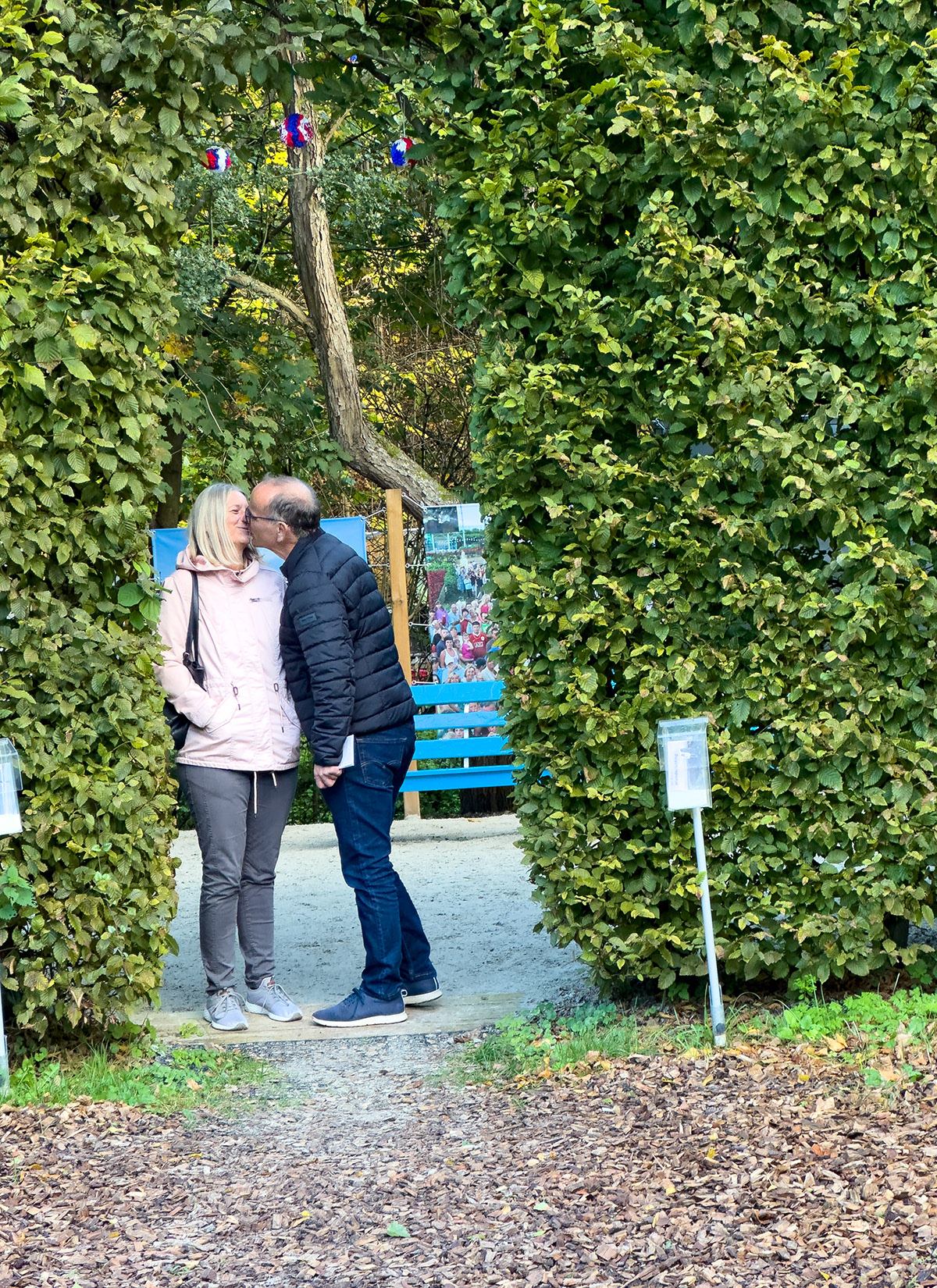
Over the six months of the Landesgartenschau, thousands of people wandered through the garden. Some stopped to look at the photographs, while others sat quietly amongst the planting. A couple sharing a kiss on the old bench became one of those wonderfully simple moments that seemed to capture what the project was about.
After all, a bench needs no instructions. In a world increasingly filled with screens, notifications and noise, the garden offered something very simple: somewhere to pause, sit beside another person and simply enjoy being there.
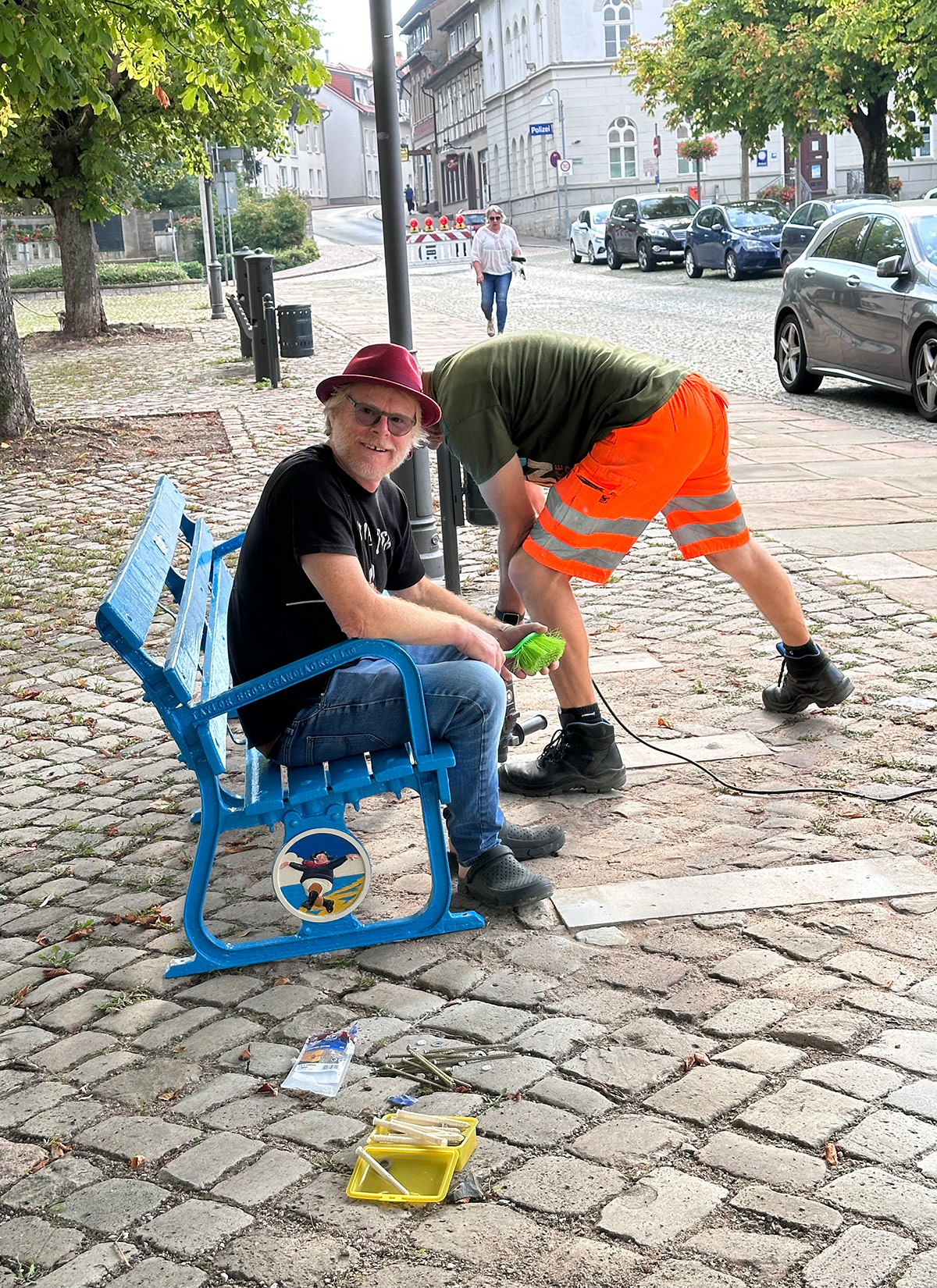
When the Landesgartenschau ended, the story did not. The historic bench was given a permanent home opposite the telephone box in the centre of Bad Gandersheim, and suddenly Two Voices had two very different ways of communicating. One invited people to open the door, discover a book and read. The other simply invited them to sit together. Sometimes, that is all you need.
BLUE ~ 2025
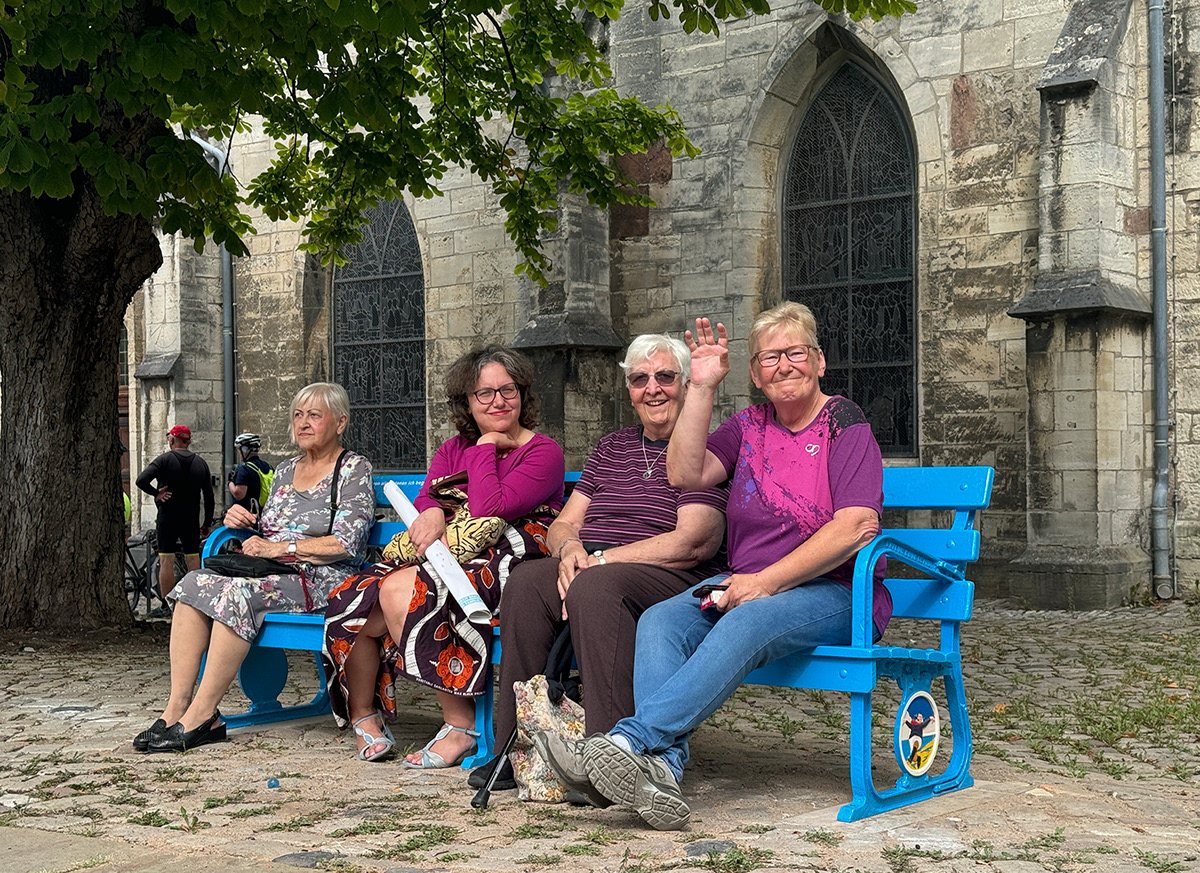
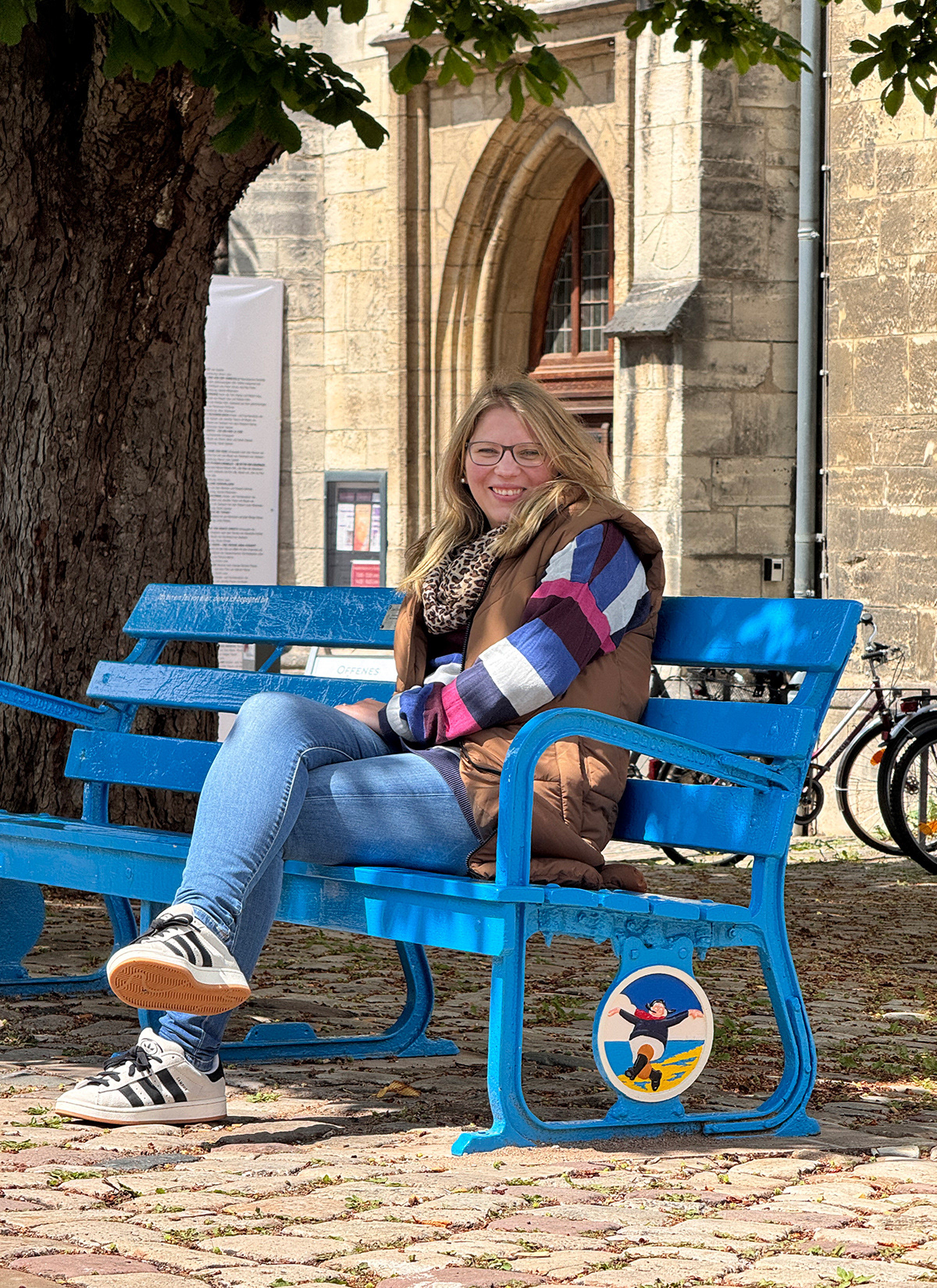
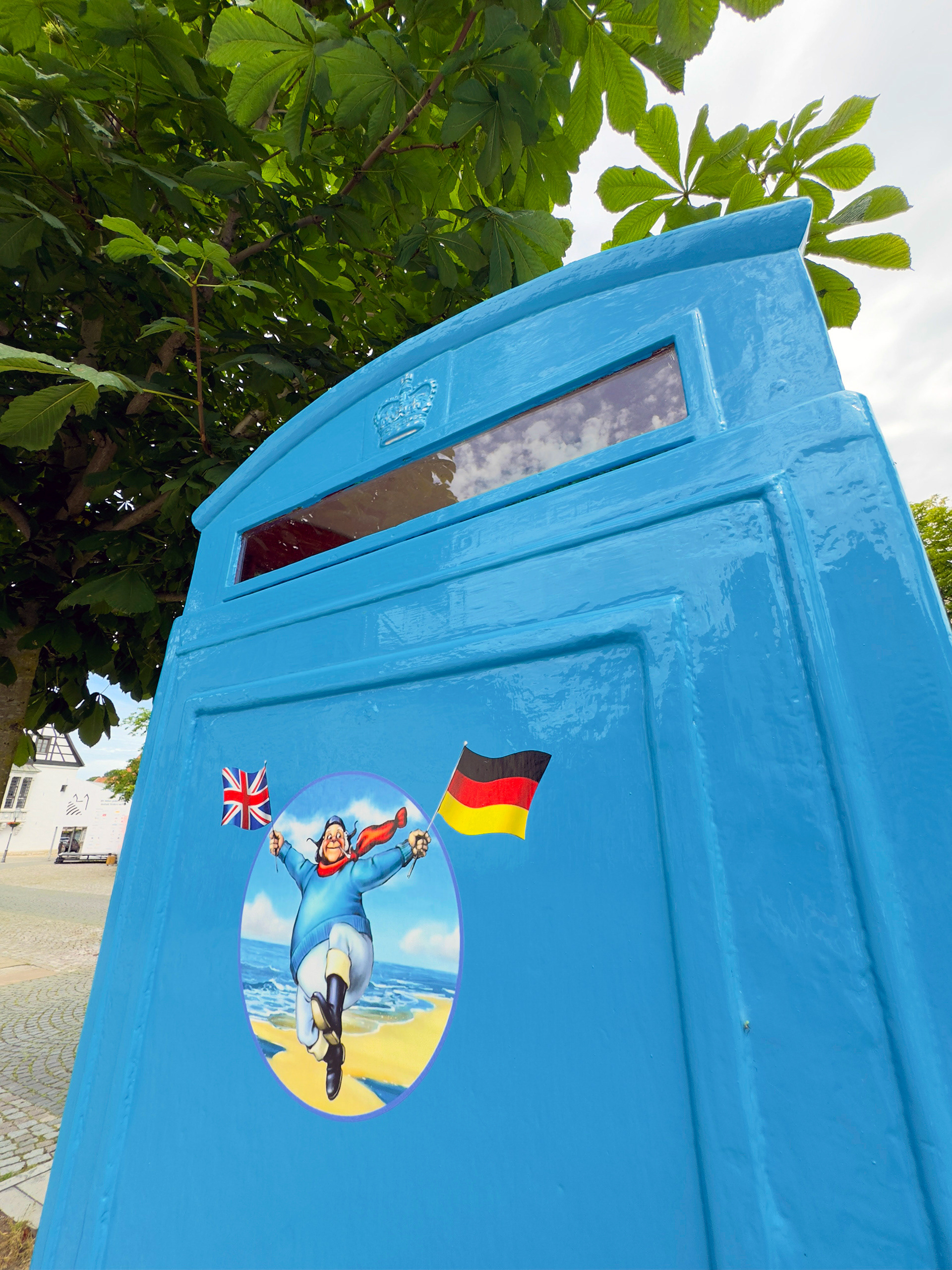
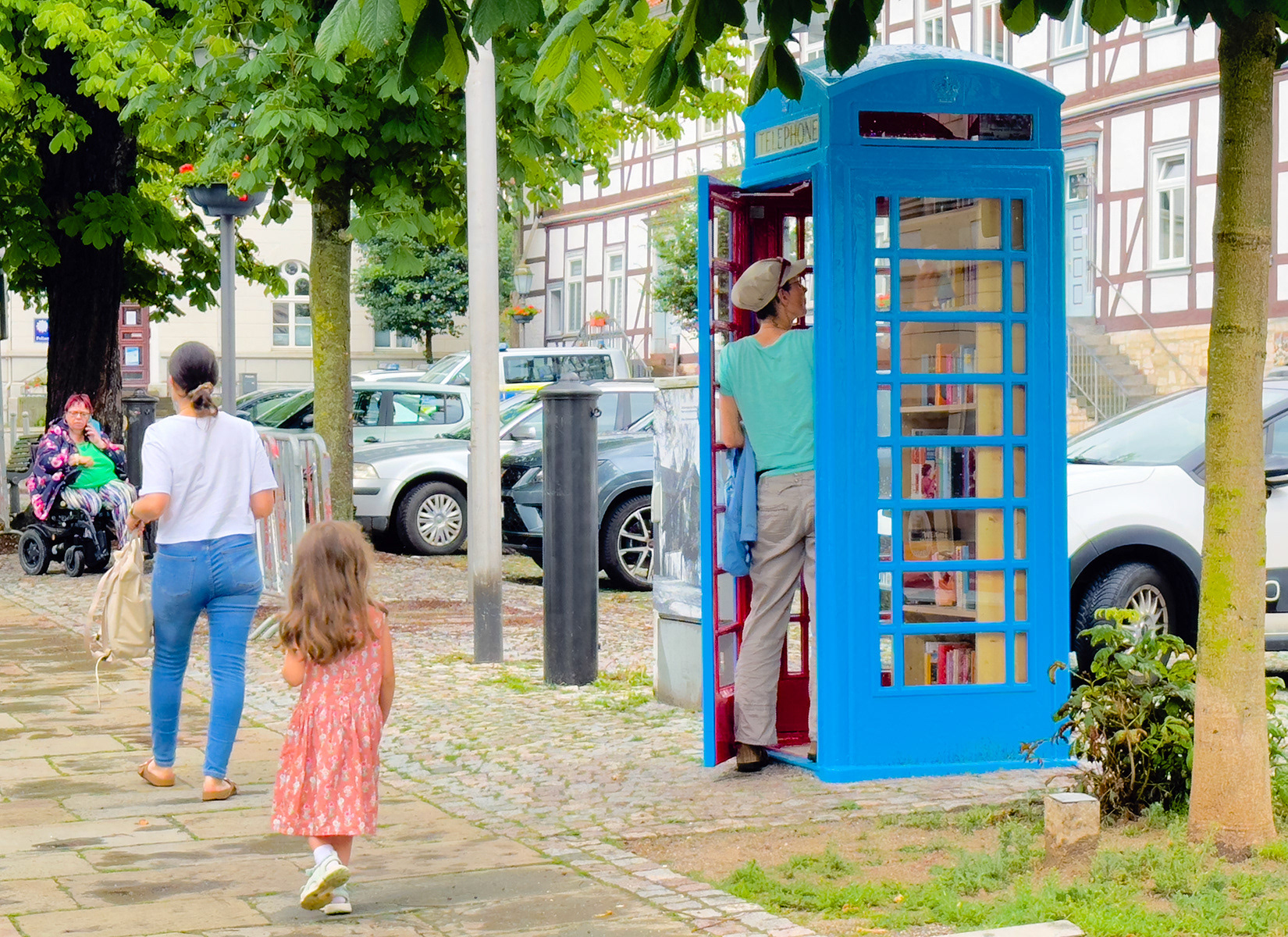
Ten years after the telephone box first arrived in Bad Gandersheim, Two Voices reached another special moment. The box and the historic Skegness bench now stood together permanently in the town. Both had travelled from England, both had their own history and both had become part of everyday life in Germany.
For their next chapter, they turned blue. The colour was another little piece of Skegness, inspired by the beautiful blue skies that every visitor to the seaside hopes to see on a perfect summer's day.
Then came a rather wonderful coincidence. Both the box and the bench now carried words by Alfred, Lord Tennyson, one of England's best known poets and a fellow Lincolnshire man. While reading more of Tennyson's work, Byford discovered something he had somehow missed: Tennyson had written a poem called The Two Voices. After a decade of using those same words for the project, the discovery felt almost too perfect.
Perhaps the most rewarding part of Two Voices, however, was no longer its colour, its poetry or even its history. It was simply seeing it used. People opened the box and took books, while others sat on the bench. They stopped, talked and occasionally strangers met.
After ten years of changing colours, exhibitions and ideas, perhaps this was what Two Voices had always been about. Not the box or the bench, but people. A bench, a box and a few words of poetry had created somewhere for people to connect, and the conversation continued.
HER / SIE ~ 2026
In 2026, Two Voices found perhaps its most human voice yet. This time, the stories travelled from Skegness to Bad Gandersheim through the faces and words of 23 women.
Her / Sie brought together women born across eight decades, each with a connection to Skegness and each with her own story of life, love, loss, change, resilience and belonging. Some were born in the town, some found their way there, while others left and returned. Each woman was photographed and invited to share a fragment of her life in her own words.
Individually, they were deeply personal stories. Together, they became something much bigger: a portrait of Skegness told through the women who have helped shape its past and continue to shape its present. Because a town is never just its buildings, streets or coastline. It is its people.
Created for Bad Gandersheim's 2026 celebrations of Roswitha (Hrosvitha), a woman who found her voice more than a thousand years ago, Her / Sie brought those contemporary voices from the Lincolnshire coast to Germany.
The portraits and stories continued an idea that had begun with a yellow telephone box eleven years earlier. A postcard had become a conversation, and that conversation had grown to encompass remembrance, friendship, hope, books, a garden, a bench, photographs and personal stories.
Perhaps Two Voices was never really about just two voices. It was about creating the space for many voices to be heard, bringing two towns and two countries closer together and allowing their stories to be shared.
And there are many stories still to be told.
Discover Her / Sie and meet the 23 women behind the portraits at roswitha.co.uk.